“Wow, it’s like winter will never come!” was the kind of thing everyone in Wellington was saying, basking in the balminess of early June, 2021.
Lulled by that amazing weather, I booked two weeks’ leave and set off for my first attempt on this section of Te Araroa. Sadly, winter did come – the moment I started walking. The plan had been to tramp from Turitea near Palmerston North to Waikanae, about 120km. But I only did a paltry 45km, before being talked out of continuing by Makahika Outdoor Pursuit Centre co-owner John Duxfield.
“Wait for spring,” was his advice back then. “Or even better, summer.”
Now it was spring, and I had some more leave. The weather still wasn’t playing ball, but my feet were itchy for a long solo walk. I’m trying to do the whole of Te Araroa as continuously as possible, all north to south, and all in order. But this time, I decided any progress on Te Araroa was better than none, or I’d be 90 when I got to Bluff. So I’d do the easy section from Ōtaki to Wellington first (you can read that section here) and come back to the dodgy bit the following week, when a weather window looked to be opening.
A few days after arriving in Wellington, footsore and tired from six days and over 100km of walking, I’d had a good rest and thought the weather was looking… not exactly good, but maybe not lethal. I rang John.
“It looks like it wouldn’t be completely daft,” he said. “You probably won’t see a lot until the third day. But it looks just cold and damp, not a screaming gale.”
So that’s how I came to be standing on the side of a gravel road in late September, outside Makahika, in the Tararua foothills about 15 minutes east of Levin.
I’d driven up that day from Wellington to the Otaki Gorge road end car park, where I planned to finish this section. From there, I’d arranged to be picked up and taken through to Makahika by a transport provider listed in the Te Araroa trail notes.
He drove away with a cheery toot, and I was alone again in the quiet afternoon, in the shadow of the mountains.
Day 88: Makahika Outdoor Pursuits Centre to bush line, just past Poads Road end(6km)
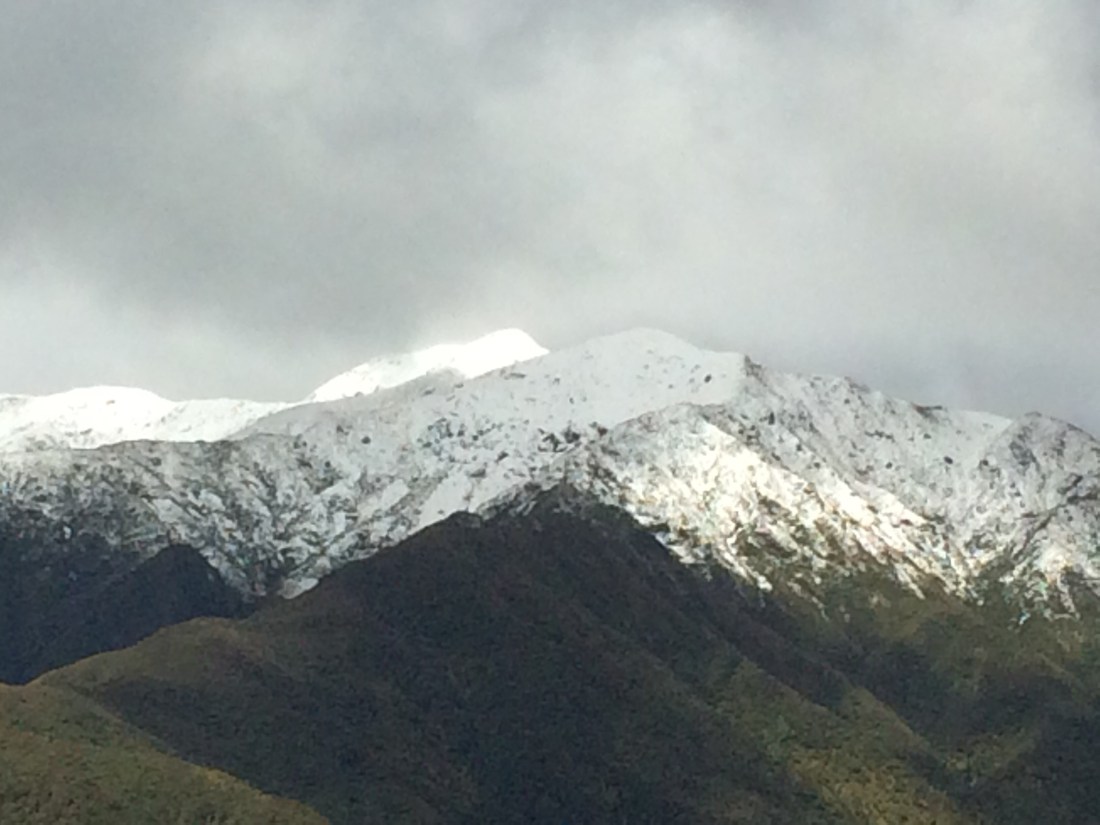
First up was an easy, flat few kilometres along Gladstone Road, a detour around a recent slip notwithstanding. As I scooted along I cast a pensive eye up toward the ridges I’d be traversing in a day or two. They looked a bit forbidding.
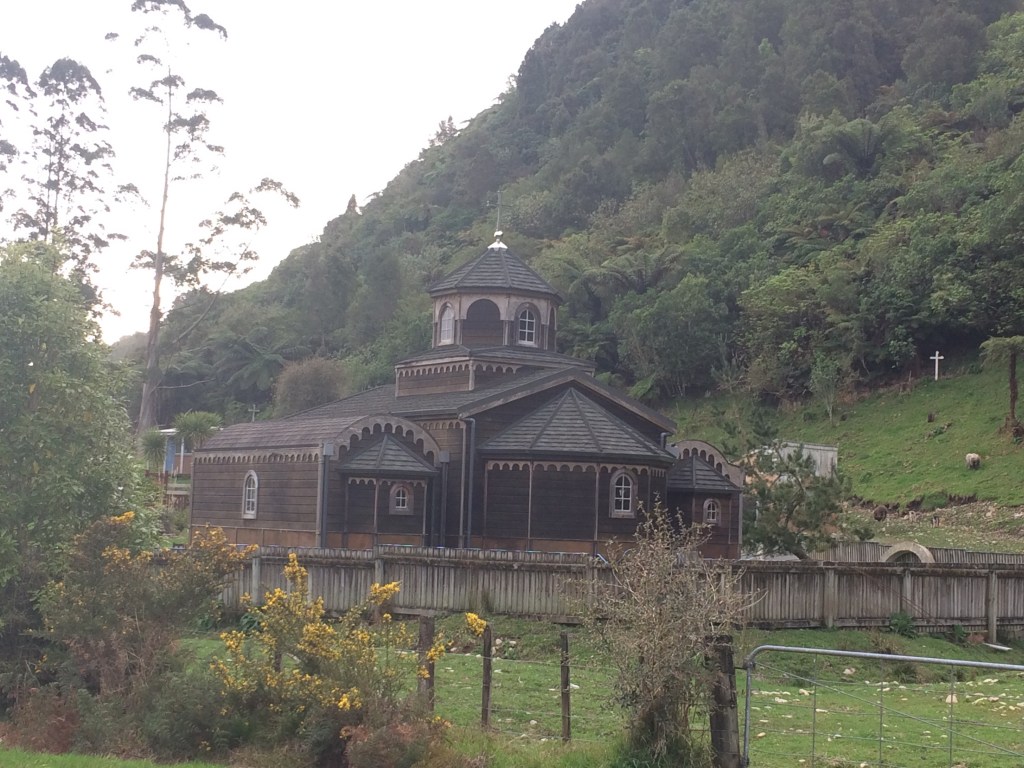
Just before the intersection with Poads Road you pass a Greek Orthodox monastery, peaceful in its nest of forest.
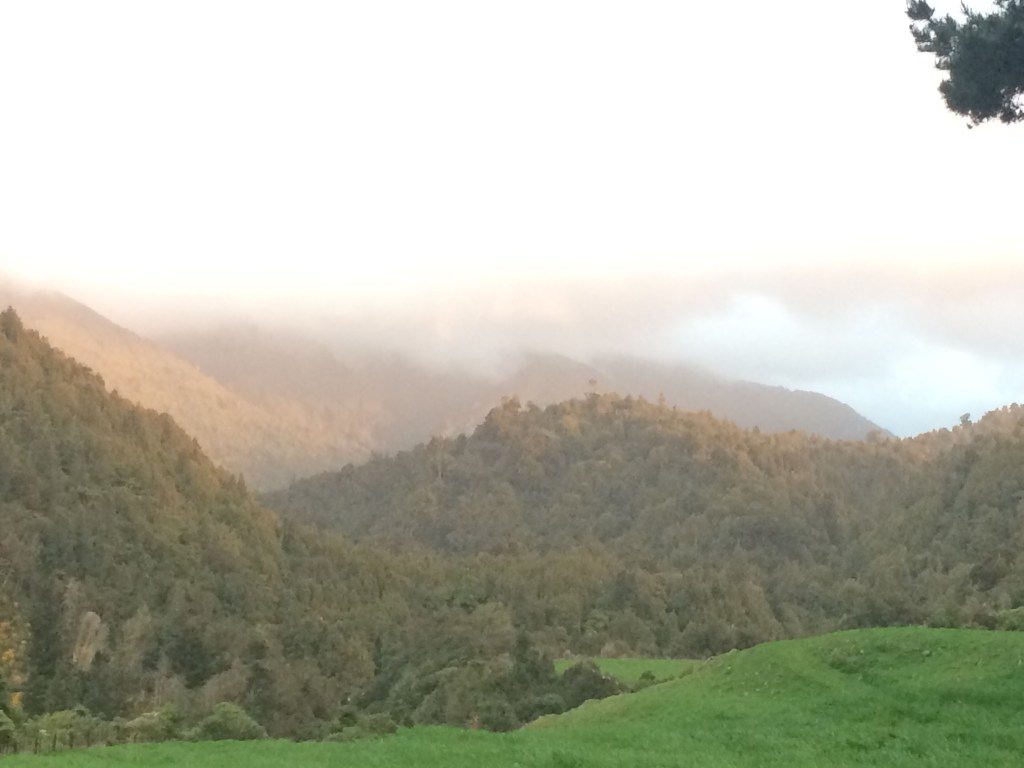
Turning left into Poads Road, you are now heading straight toward the bush, following the Ōhau River. The setting sun lit up a farm’s trees; it was still too early for blossom.
After a couple of kilometres you reach the end of the road and an info panel detailing where you can go in the ranges from here: pretty much anywhere, if you’re well-equipped and have plenty of time.
I took a last look back the way I came, at the road, powerlines and pylons. No more of that paraphernalia for the next few days. It’s always exhilarating and a tiny bit frightening, on some cave-person level, to turn your back on the built world and walk into the wild.
The first kilometre or so is across farm paddocks. It’s important to stick to the route, which only exists by the farmer’s generosity. And there it was, the proper unforgiving wild.
I met a group of three teenage boys and an older man, coming the other way, carrying rifles. They told me to watch out for a big slip three kilometres up the route I would be taking in the morning.
“It looks like people have scrambled across, and we thought about it. But it looks really dodgy,” one said.
I thanked them and kept going; something to consider in the morning.
I found a good spot at the bush line, pitched my tent and took in the sunset.
It was an easy scramble down to the river to get water. The Ōhau Gorge was a temple of moss, stone and pewter-coloured water in the last of the light.
After dinner it was bliss to fall asleep on the edge of the forest.
Day 89: Bush line to Waiopehu Hut (about 14km, including back-track)
I broke camp early, then hesitated a while at a track junction five minutes from my campsite. Should I take the designated Te Araroa route up the Ōhau Gorge and the Gable End ridge to Te Matawai Hut, and risk not being able to get past the slip the hunters had warned me about? It would be quicker and easier than the alternative, a longer route up a spur that begins at this junction.
I wanted to get up to the tops as soon as possible, to lessen the chance of the weather closing in on me.
I decided those hunters had looked a little on the inexperienced, over-cautious side. I wasn’t carrying a blunderbuss, and maybe I had more bush-bashing experience than them. Maybe the slip would look less imposing to me.
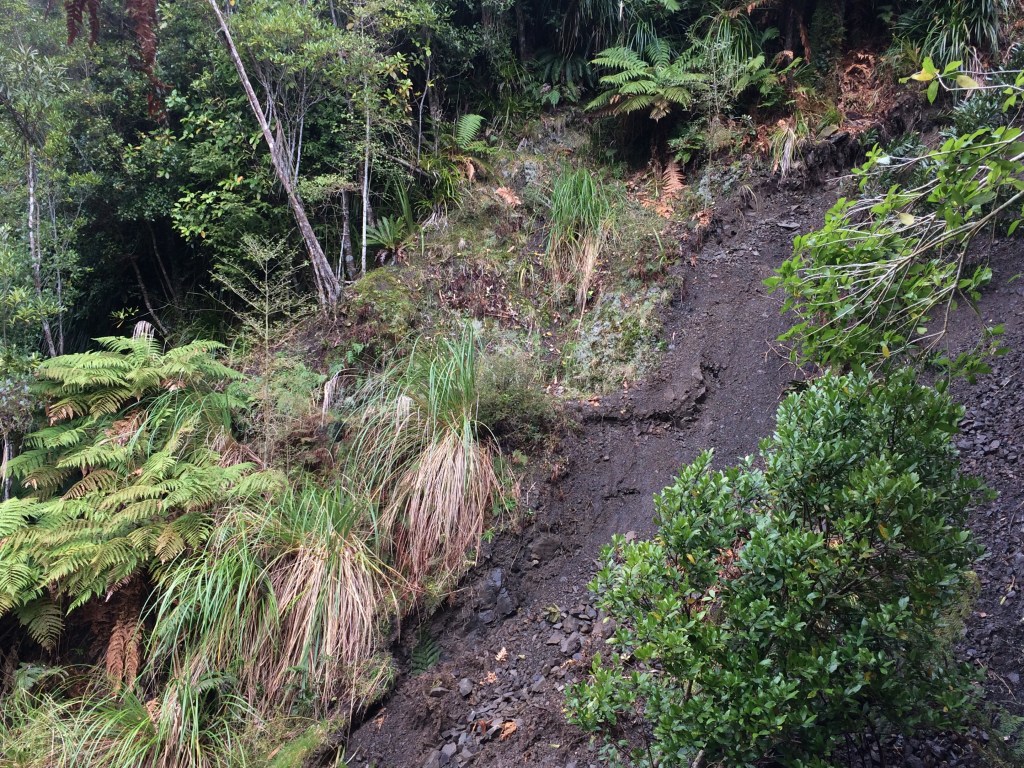
After about an hour I reached the slip. The photo doesn’t really do it justice but it was, in fact, pretty flipping imposing:
It was a good ten metres across and thirty or forty from top to bottom. From where the track was bitten off on my side, it was about three metres down to a steep, muddy, scree-covered, slippery-looking slope. If you could drop down to it somehow, there was no way of knowing whether you’d be able to get a grip or just keep sliding into the river, out of sight and a long way below. If you did get across, it looked like it wouldn’t be too hard to make your way up onto where the track continued. But the getting down onto the slip was the problem.
I shrugged off my pack and climbed up as far as I could; I couldn’t see anywhere that provided a safe entry point to the slip. Near the top, the slope was essentially vertical – so I couldn’t bypass it above.
I climbed back down to the track and then carried on below it a short way, but found the same problems.
I sat down a while on the lip, my legs dangling, eating nuts and drinking water, examining my options.
The alternative route to Te Matawai Hut via Waiopehu Hut would be several hours longer, including backtracking over all the ground I’d made that morning. Six kilometres, by the time I’d done that bit twice. Plus the several extra kilometres of the longer route itself. I’d lose at least half a day.
(The Waiopehu track used to be the Te Araroa route. It was changed to this shorter, steeper way, cutting out Waipoehu and going direct to Te Matawai, presumably because it’s a quicker way up onto the main north-south ridge.)
I hate turning back. But sometimes you just should.
If I tried to get across and slipped, I could disappear into the river without a chance to set off my locator beacon. Or I could snap an ankle and have to be evacuated, before my adventure had really started.
It would’ve been different if I hadn’t been alone; you could lower each other down, help with foot holds.
I sighed. Discretion was the better part. Back I went.
It’s a steep old bit of country; it’s easy to see how bits of track get waterlogged and slip off.
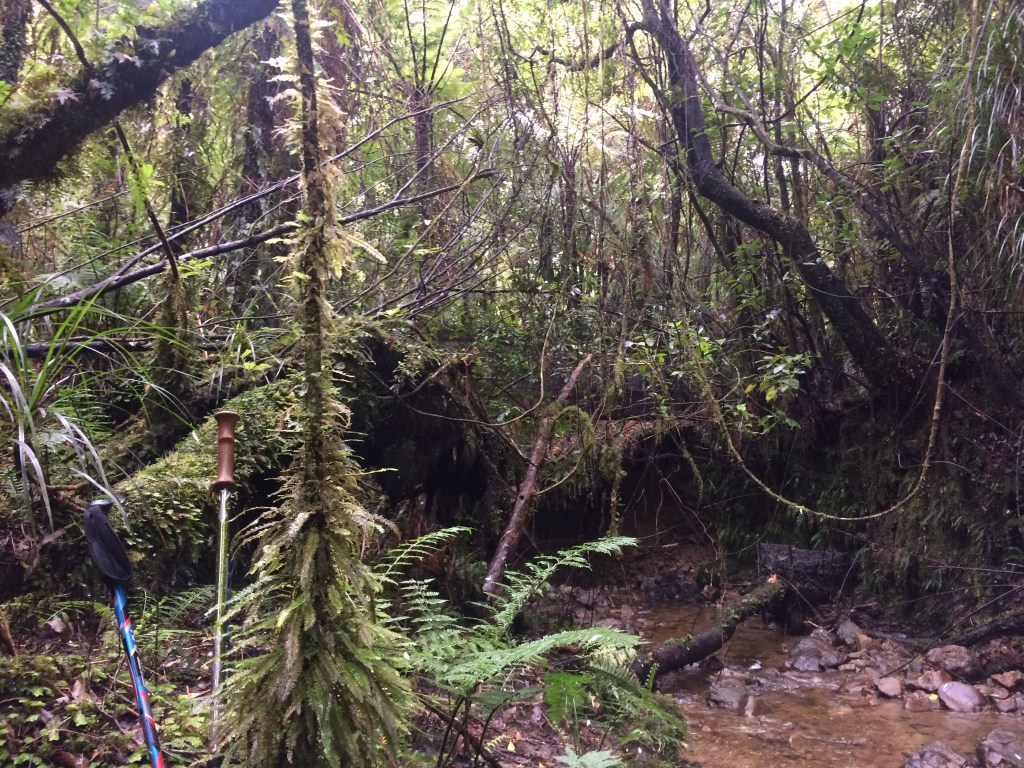
I stopped by a creeper-tangled tributary of the Ōhau for a cup of tea.
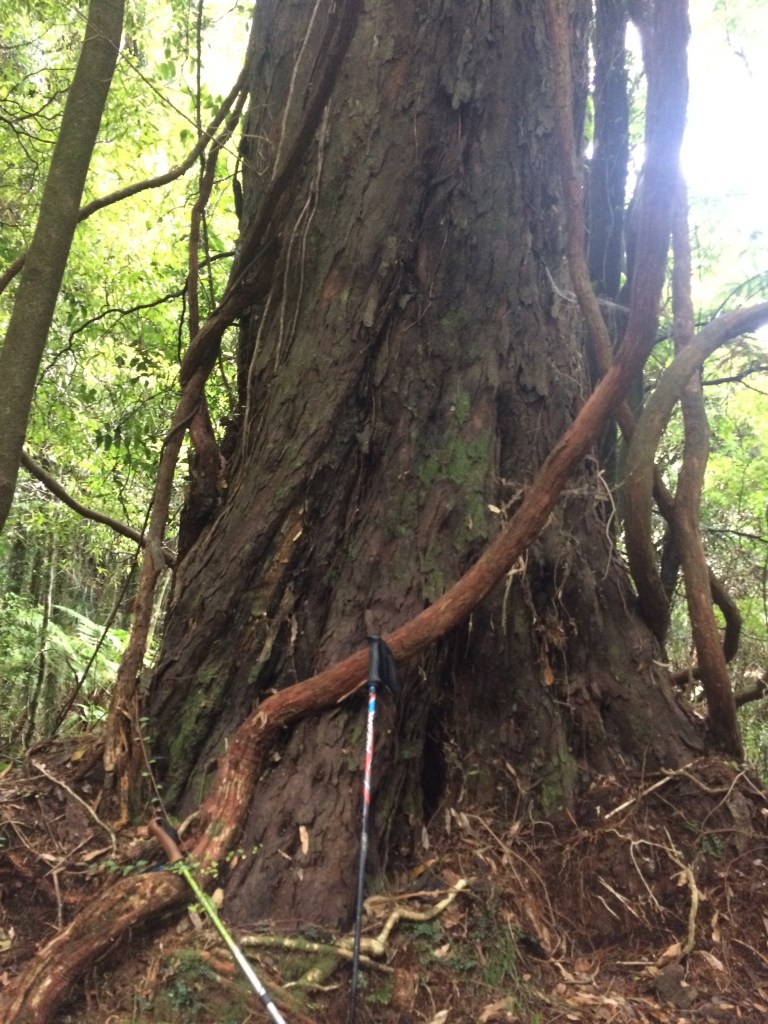
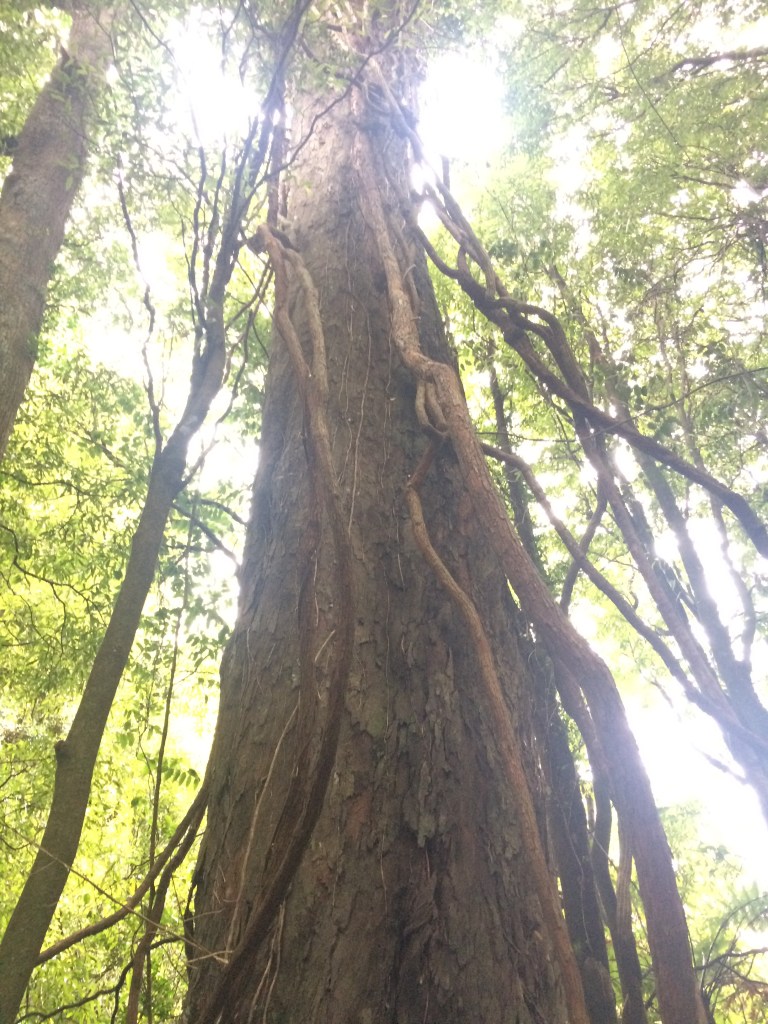
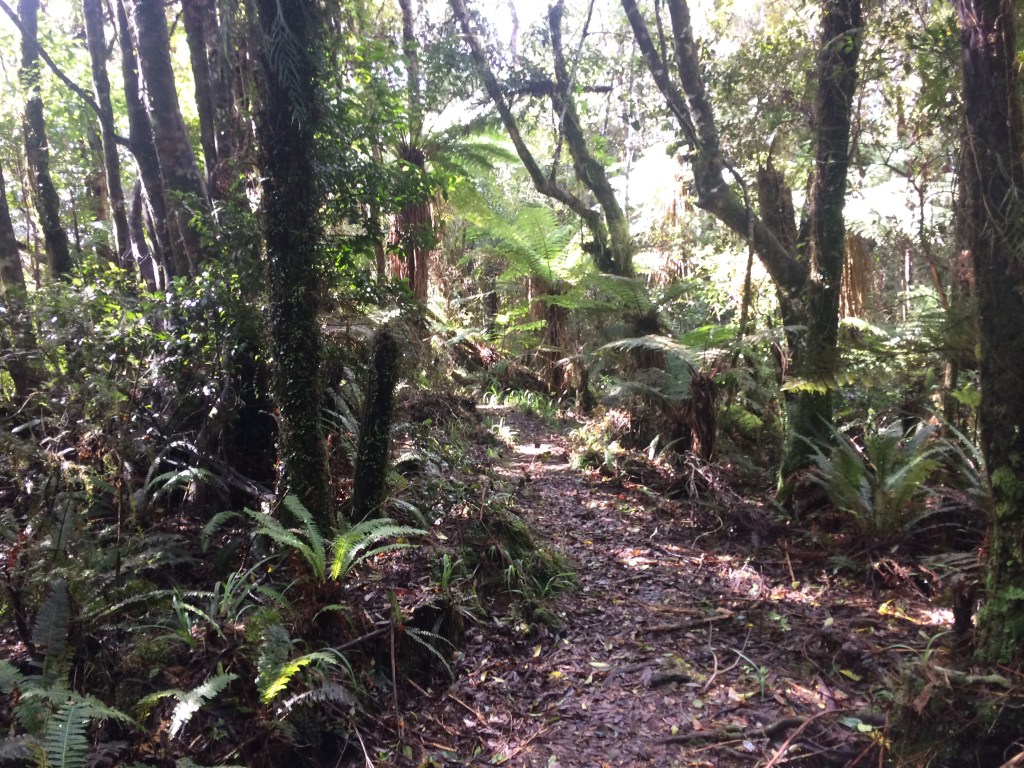
Then it was straight up onto the spur that leads to Waiopehu. Finally I was underway properly. Some giant trees, replete with rampant climbing vines, made me feel a bit better.
It’s always a thrill to be among such enormous living things.
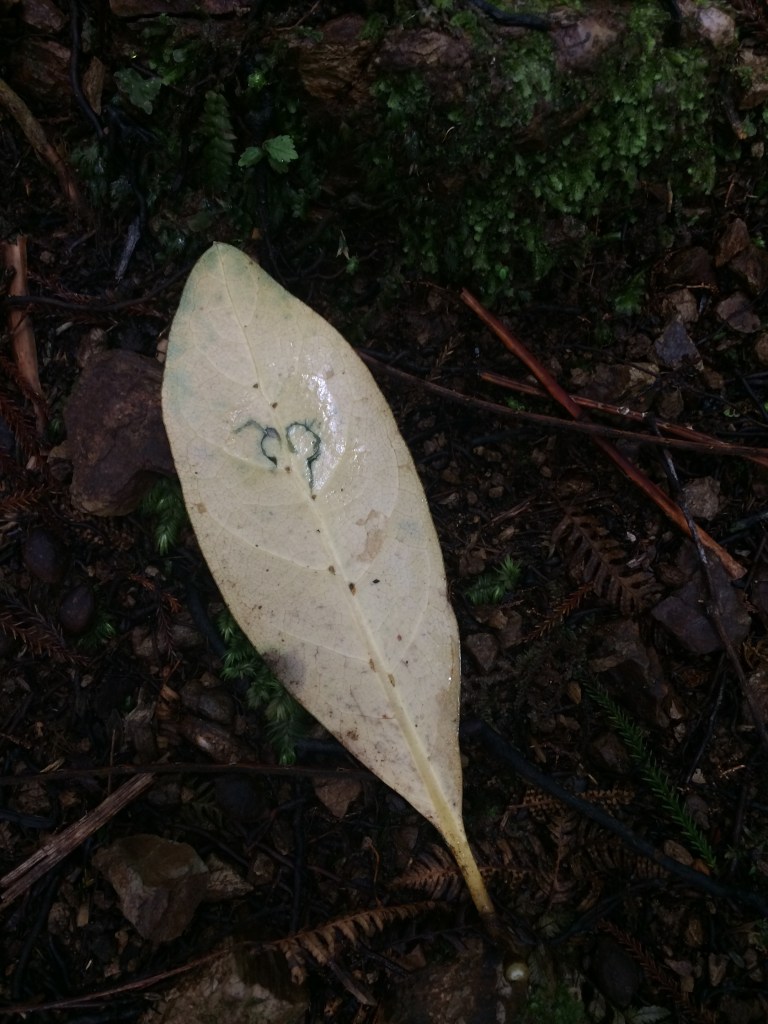
I started noticing small paterns on the white underside of certain fallen leaves. Some sort of burrowing insect seemed to have a penchant for feeding in swirls, spirals and circles. On this one, I detected the sketch of a heart. That cheered me up too.
It was great being back in the tumbling, exuberant, prolific forest.
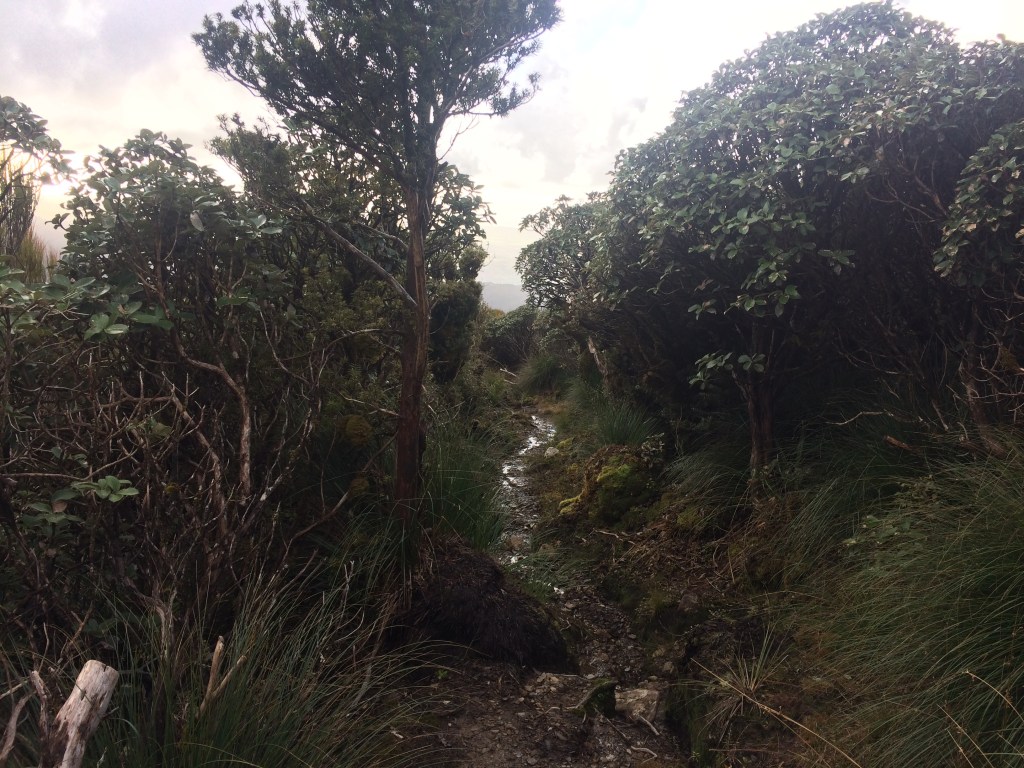
As the track climbs steadily up the ridgeline, the bush thins, becomes willowy.
As always, the coffee breaks were among the best moments.
I reached a spot called, on the map, “Bush Corner”. There didn’t seem to be a corner there, or any other distinguishing feature. Later in the hut book I’d read a comment that summed it up: “Bush corner is a state of mind.”
A bit futher along the canopy broke briefly for a glimpse of cloud lying heavy over vast, dark swathes of bush.
It’s an unrelelenting, muddy slog, up and up, but eventually I came out in the subalpine zone – low, gnarled shrubs, a stand of leatherwood, tussock.
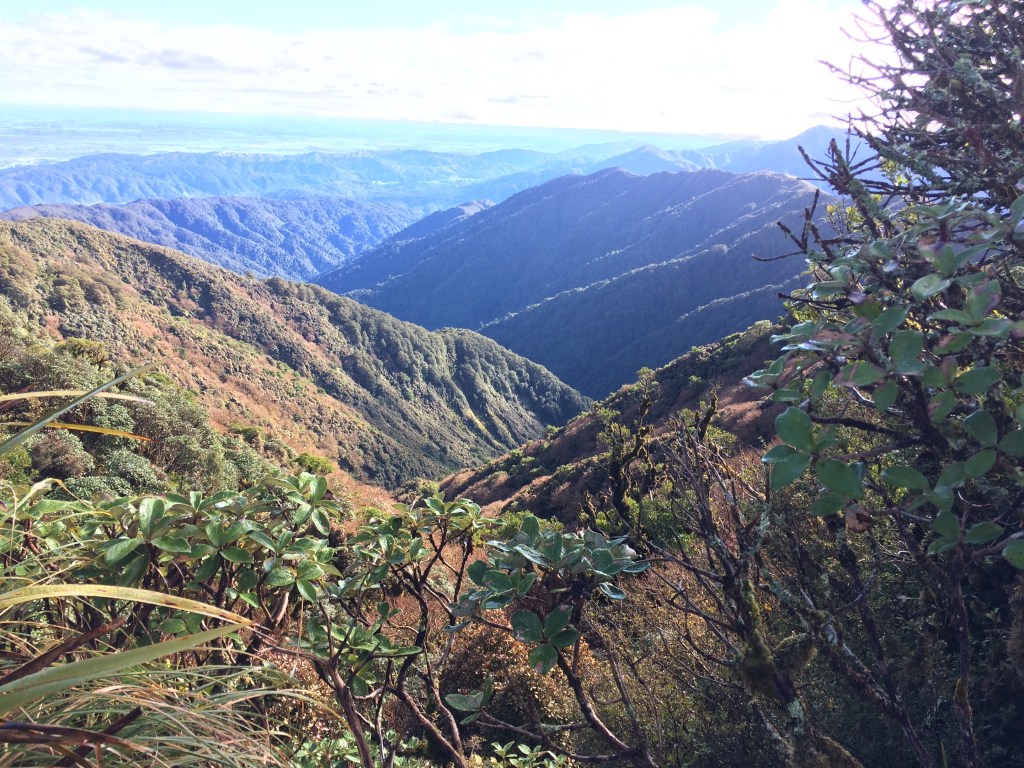
Then the bush began to drop away altogether and the views opened up.
This is the Gladstone Road valley, where I started walking the afternoon before.
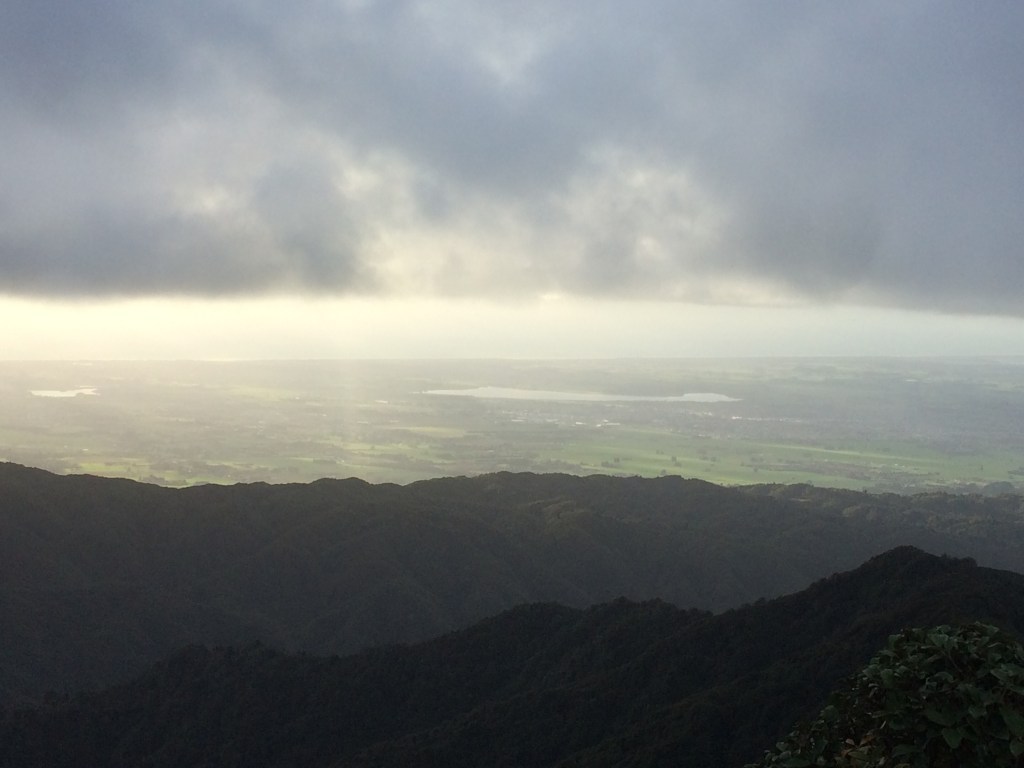
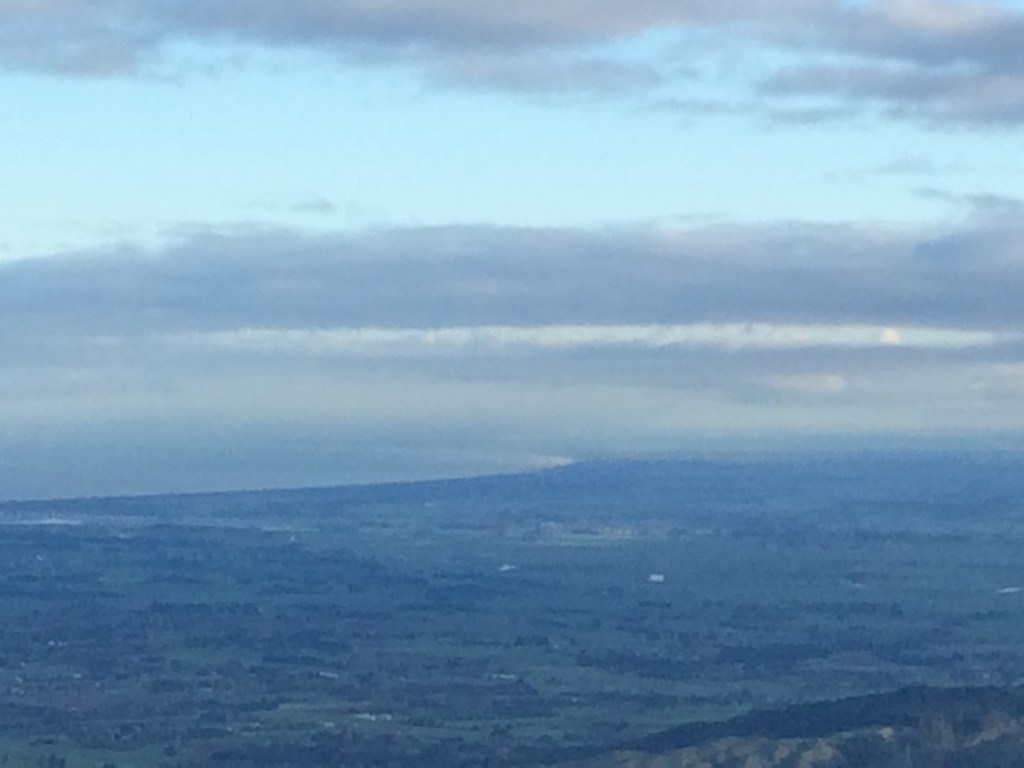
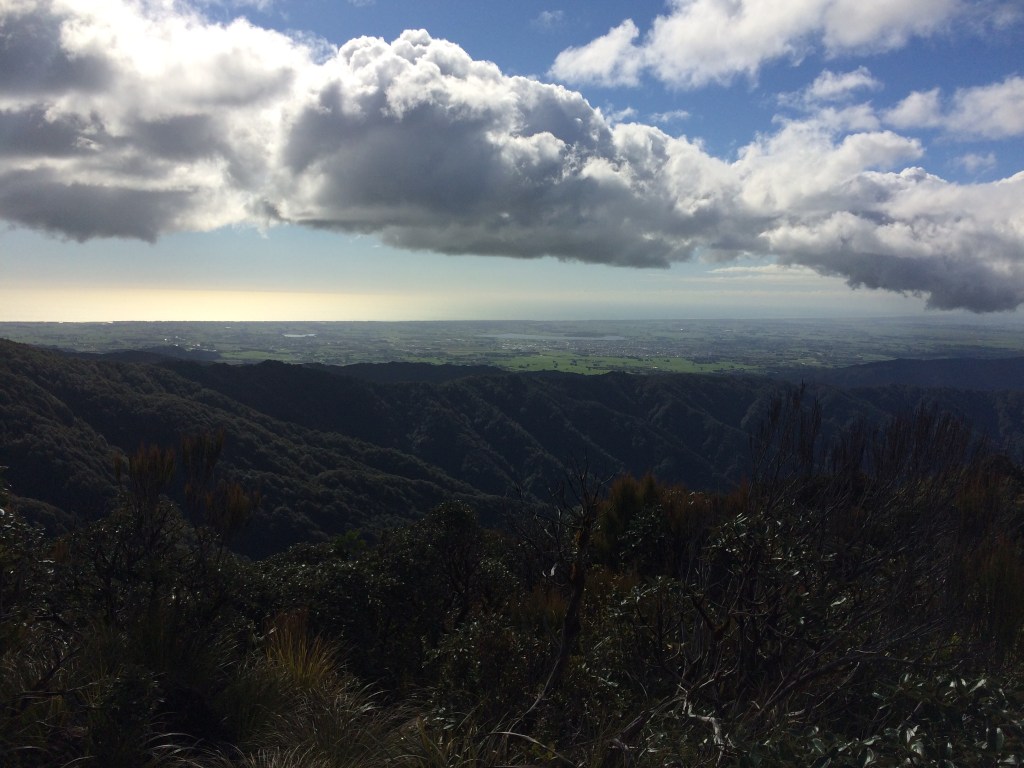
And further to the west, Levin, with Lake Horowhenua at its back, and then the Tasman Sea.
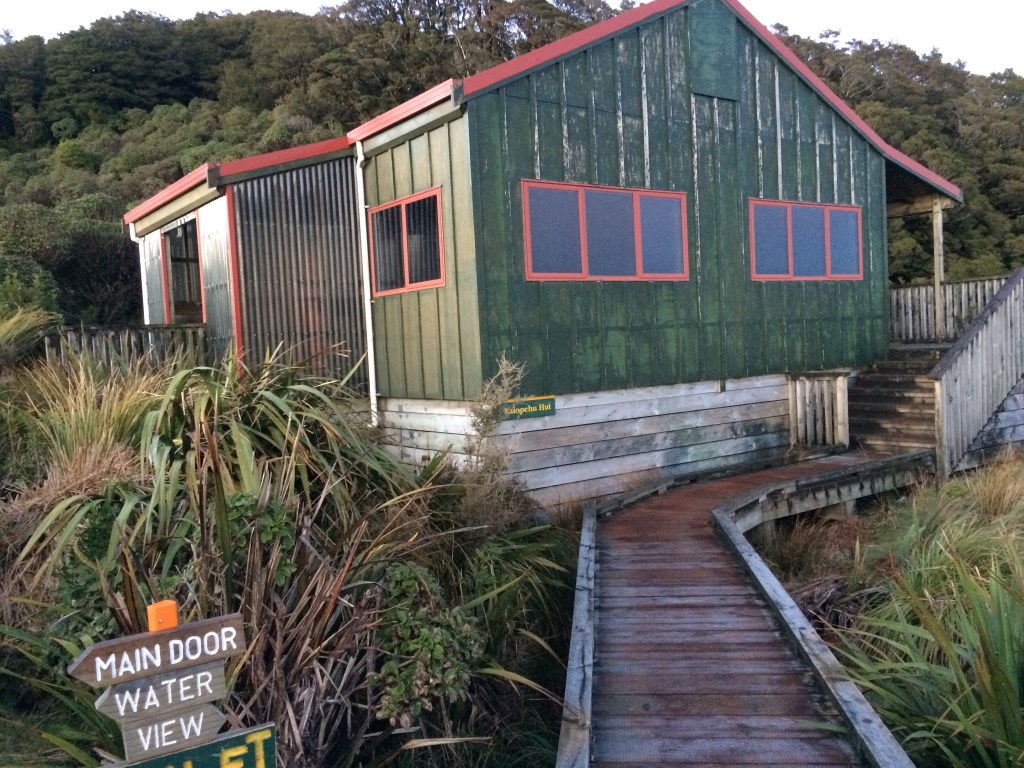
A few minutes further on was the hut, at just under 1000 metres above sea level. And I could feel that I’d walked most of those.
I liked how the sign detailed the important amenities: door, water, toilet, view.
And what a view. From the hut’s ample deck, you could can see the curve of the island, from Horowhenua to Manawatū and Whanganui.
As the sun set, the sea shone like brass between the clouds and the darkening land.
I always find it a sweet, lonely feeling, seeing the first lights come on far away, way down on the plain.
It was very cold in the hut once the sun went down. I put on all the clothes I had, ate and got into my sleeping bag pretty quickly.
Day 90: Waiopehu Hut to Te Matawai Hut (5.5km)
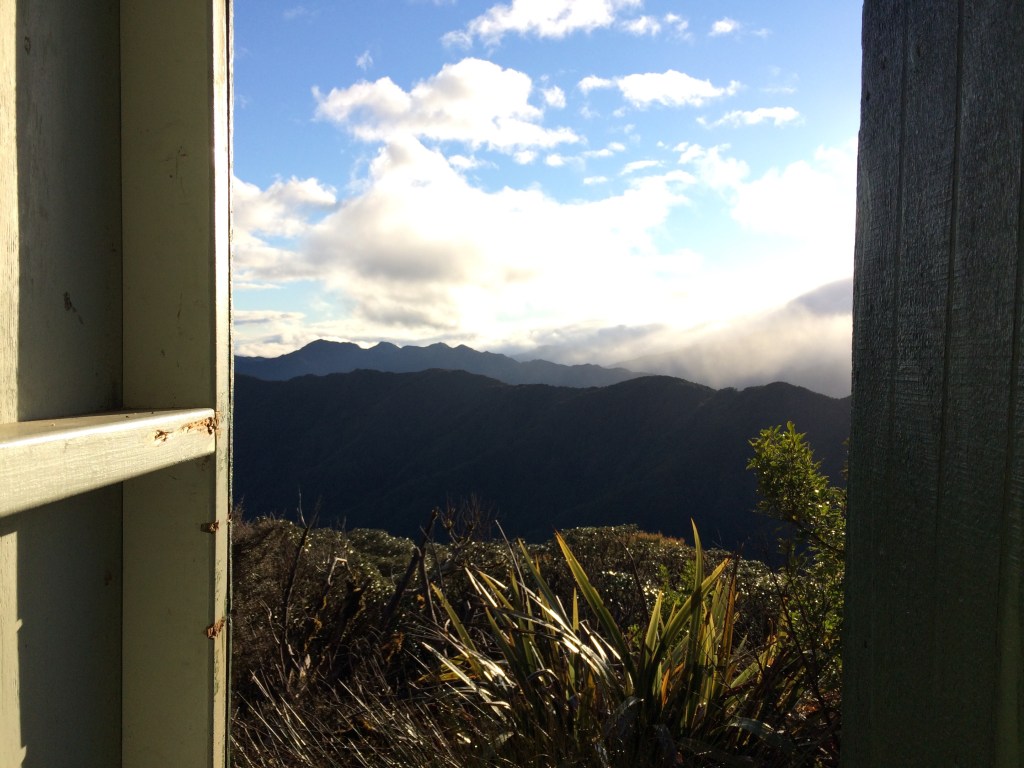
The sun was out in the morning and the views were even better. It’s hard to see in this pic, but a snow-covered Mt Ruapehu was visible on the horizon.
The view from the dunny wasn’t bad either.
And this was where I was going: Pukematawai, at 1432 metres a pretty challenging climb. Hopefully that cloud would lift by the time I hoped to be standing on top, the next morning. That would would make it worth the effort (not to mention safer).
First I had to get up Waiopehu itself, the peak behind the hut. At 1094m it didn’t take long. New views opened up, and a few flurries of snow came down.
This is looking back the way I came. The ridge on the right is the current Te Araroa route to Te Matawai, the one I’d planned to take – Gable End Ridge. Instead I came up the one on the left. In the valley between them is the Blackwater Stream; the slip where I turned back is close to where that stream enters the Ōhau River.
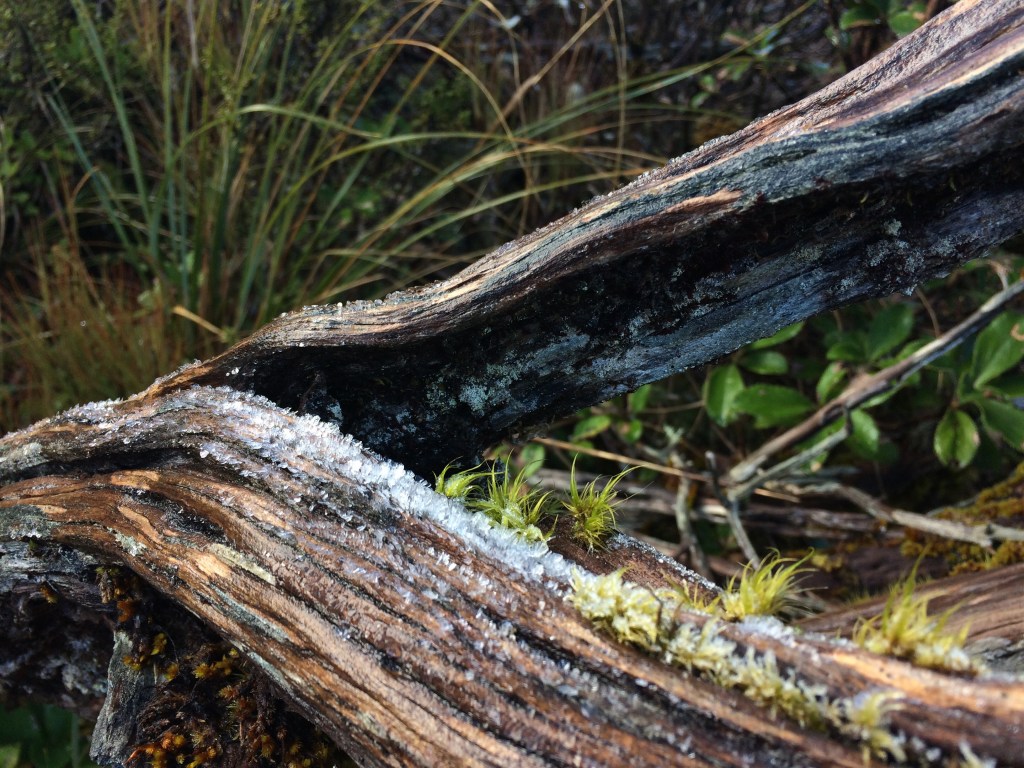
There was ice on the tussock and mud, and on the leatherwood.
I was enjoying my first time up here; Waiopehu is a peak I’ve often heard of – the state high school in Levin is named after it, and it dominates the view of the ranges from that town.
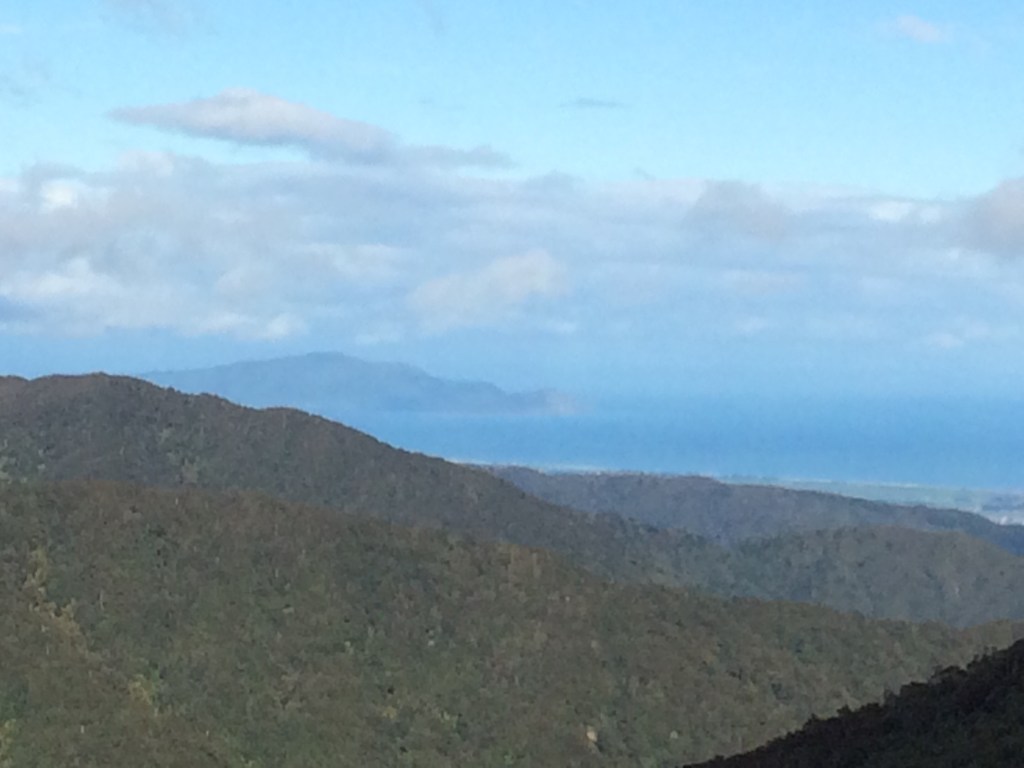
Kāpiti Island hove into view:
Then I was down off Waiopehu and heading up a similarly sized and shaped peak right beside it, unimaginatively named Twin Peak. Here’s the view of Waiopehu from there, with some ice in the foreground.
There’s a memorial cross to a tramper who died; “rosemary for remembrance” says the plaque. It was a good reminder of the risks up here.
With each step I felt myself getting deeper into the profound, huge quiet and stillness of the mountains. I bloody love it.
Here’s a fuzzy view back to Waiopehu Hut, with Levin and the coast in the background.
From the Twin Peak summit, Pukematawai was clearing a little bit, and the snow flurries had stopped.
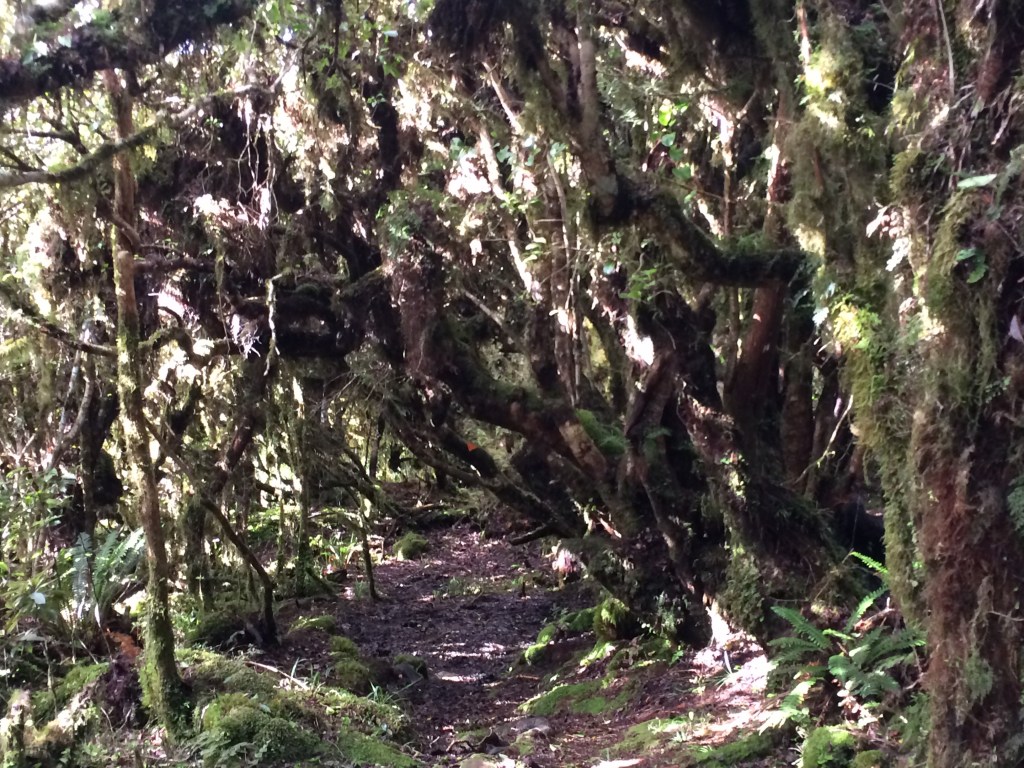
There’s a short saddle, complete with Goblin Forest, on the way down off Twin Peak.
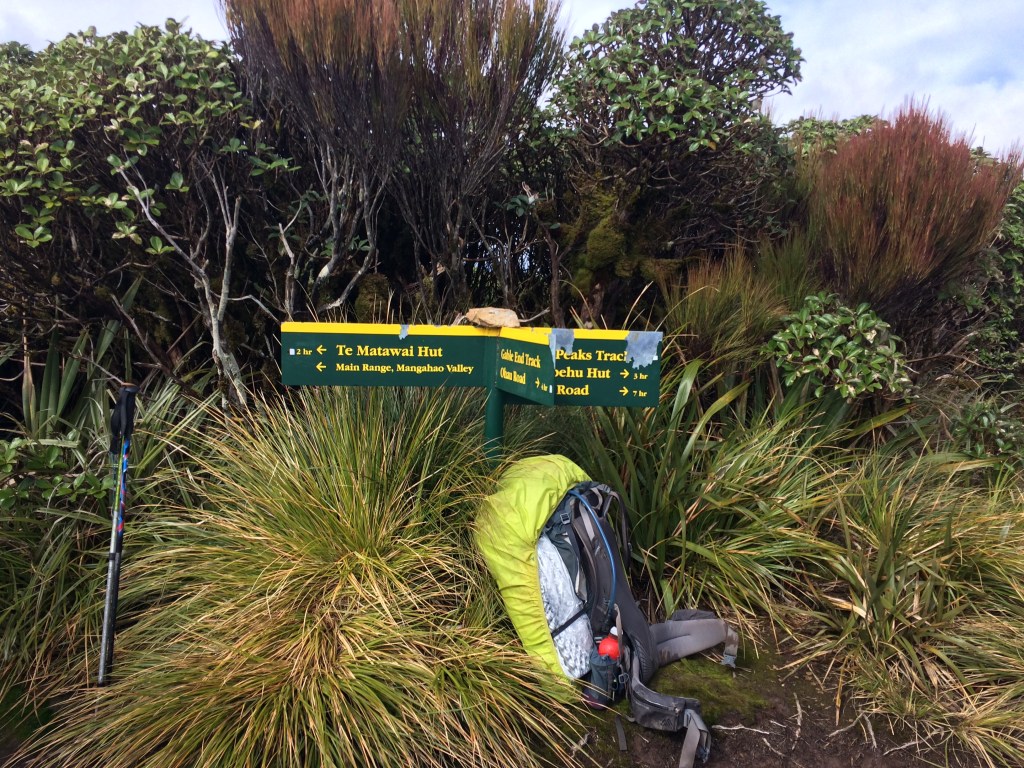
Then you’re at Richard’s Knob, the amusingly named intersection of the Gable End and Waiopehu routes.
Now it was time to lose a lot of that altitude I’d gained since yesterday morning, to go down onto the Butcher Saddle, the 690-metre high “bridge” that takes you from this ridge to the next. It’s a hard truth about tramping deep in the ranges – to go higher, you often have to go lower first.
On the way, more goblin forest.
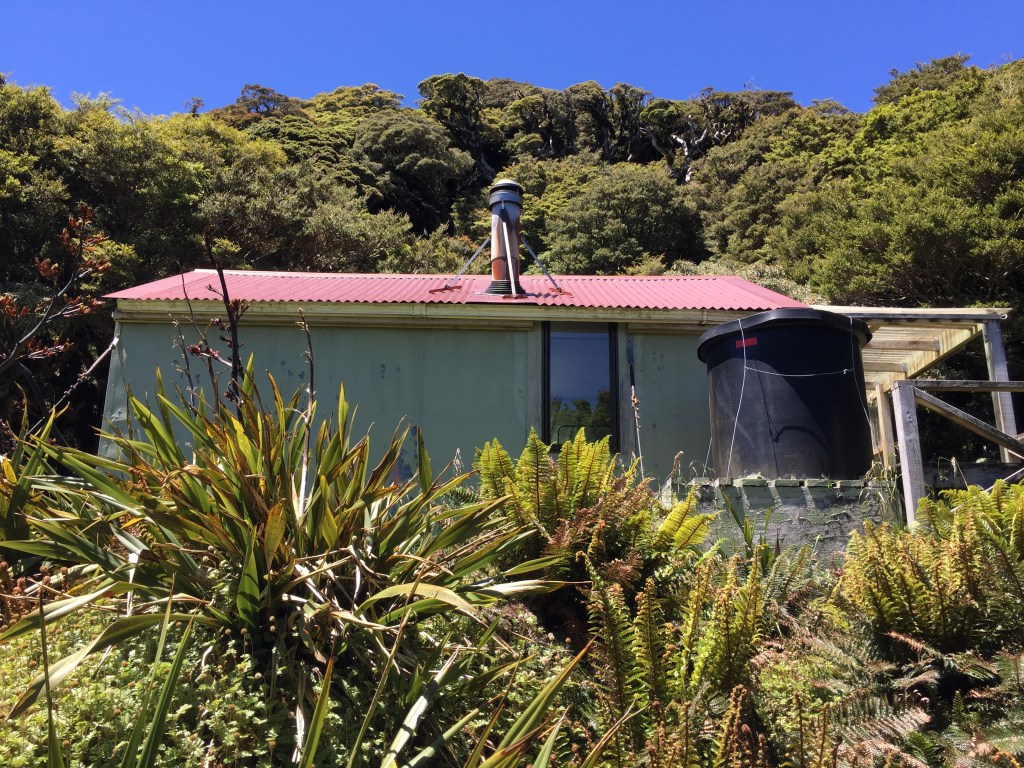
I reached Te Matawai Hut in the early afternoon. At about 900 metres, it nestles in a little north-facing hollow just off the ridge that was filled with sunshine, but still bloody cold.
There’s a heli pad nearby where I could get cell reception, and I checked the forecast. More snow coming, down to 700 metres; and gales on the tops, by the looks. My heart sank. The weather window, which John had said might make going onto the tops “not completely daft”, looked to be closing.
But I was here now. I’d hope for the best, and make a call in the morning.
I had most of the afternoon to rest up and get ready for a big few days, weather permitting. I sat at the hut table wearing all my clothes except my rain jacket, in my sleeping bag, and read my novel.
I had on woollen socks, 2 pairs of merino leggings, a merino singlet, two merino base tops, two merino hoodies, a down jacket, two merino beanies and woollen gloves, and the sleeping bag of winter-rated goose-down. I was warm enough, but only just.
Outside the wind breathed icily through a million trees and I could feel the ancient, enduring bulk of the mountains. It was a bit lonely up there, in poor weather, in the middle of nowhere, in a cold, rough little hut. But it was also quite blissful.
The hut was even more like a freezer once the sun departed. It was too cold to do anything then but eat quickly and go to bed.
My account of this section concludes in the next post. Thanks for reading! You can read about earlier stints on the trail, all the way from the top of the North Island, by hitting “home” at the top of this post.
Ngā mihi.
*Please note that this and the next post are out of sequence as regards to days, as I had to postpone them until after the Ōtaki-Wellington section, due to bad weather. I’ve posted them in sequence as regards kilometres, to preserve the full, continuous, north-to-south, length-of-Aotearoa reading experience.
It was hard to submit to sleep in the fridge-like darkness of Te Matawai Hut. When I did, I dreamt of fatal weather, being winched up into a black sky, or curling up, instead, in a ravine. When I didn’t submit, I could feel the hostility of the immense cold night press in on me.
As detailed in the first part of this post, I was on my second attempt at getting along the exposed Pukematawai-Mt Crawford Ridge in the Tararua Range between Makahika, near Levin, and Ōtaki Forks – the most dangerous section of Te Araroa trail in the North Island. It was late September, 2021.
Day 91: Te Matawai to Poads Roadvia Gable End track (12km)
This was the view that greeted me at freezing first light: the air was thick with snow and mist.
As the day brightened a little I could see the route ahead was snow-covered, and the peak of Pukematawai was completely clagged in. I had spikes to clip on my boots, but they weren’t actual crampons. Nor did I have an ice-axe, nor ropes, nor a companion; and it looked pretty dodgy up there. I could see the writing on the wall.
I had a shivery breakfast, put on all my gear, and went up to the heli pad (where I could get cell signal) for a weather update. From there the conditions looked even more inhospitable.
This was the outlook for that day:
As you can see, Metservice had tagged the post with four of the five possible “mountain weather hazard” icons: rain, snow, wind and wind chill. The only one not forecast that day was thunderstorms. The “becoming fine this evening” thing sounded tempting, but the next few days weren’t great, and trying to get up that morning onto the exposed ridge in rain, snow and gales sounded like asking for trouble.
I could have waited the morning out and tried for the next hut along the route, Dracophyllum, that afternoon, since the weather was supposed to improve. It’s only about five hours from Te Matawai and I’d have an extra hour of daylight, as daylight saving had started that day. But still, I was running out of time – it was Tuesday, and I had to be at work on Thursday.
And the freezing level would still be lower, that afternoon, than the top of the peak pictured below, Pukematawai, which I’d have to go over. Not to mention the rain, which would contribute to a wind chill, Metservice said, of up to 10 degrees below zero. My gut said “don’t do it”.
If I’d had company, it might have been worth a shot. But you have to lower your tolerance for risk when you hike alone. I’ve been on razor-back, snow-covered ridges in icy conditions; it can be pretty hair-raising. I sighed. It was over.
Having left my car at the end of Ōtaki Gorge road, where I’d planned to come out, I needed a new plan. Hitch-hiking in a pandemic seems a bit precarious so I took advantage of having cell coverage to arrange a lift from Poads Road, where I’d been dropped off on my way in.
I went back to the hut, packed up my stuff and, with an effort, turned my back on it and on the trail south. Sometimes the mountains say no, and all that. It wasn’t much comfort.
Now I had to retrace my steps from the day before; always a bit of a drag. The pic below shows the lowest point of Butcher Saddle, where I was feeling pretty low myself. They’re interesting places, though, saddles. They’re transitional, linking spaces, natural bridges, neither here nor there. They have a funny, suspended feeling.
In this case, the land dropped steeply away north and south of a narrow rib that connected two ridges; in front of me, to the west, the rib turned into a spur that rose toward Gable End ridge; behind me it emerged from another spur snaking down off Pukematawai, on the main ridge.
Those leaf-graffiti critters were at it again; here, they preferred to work in spirals.
I slogged back up out of the saddle and onto Richard’s Knob, to be rewarded with fantastic views as the promised fine weather began to eventuate.
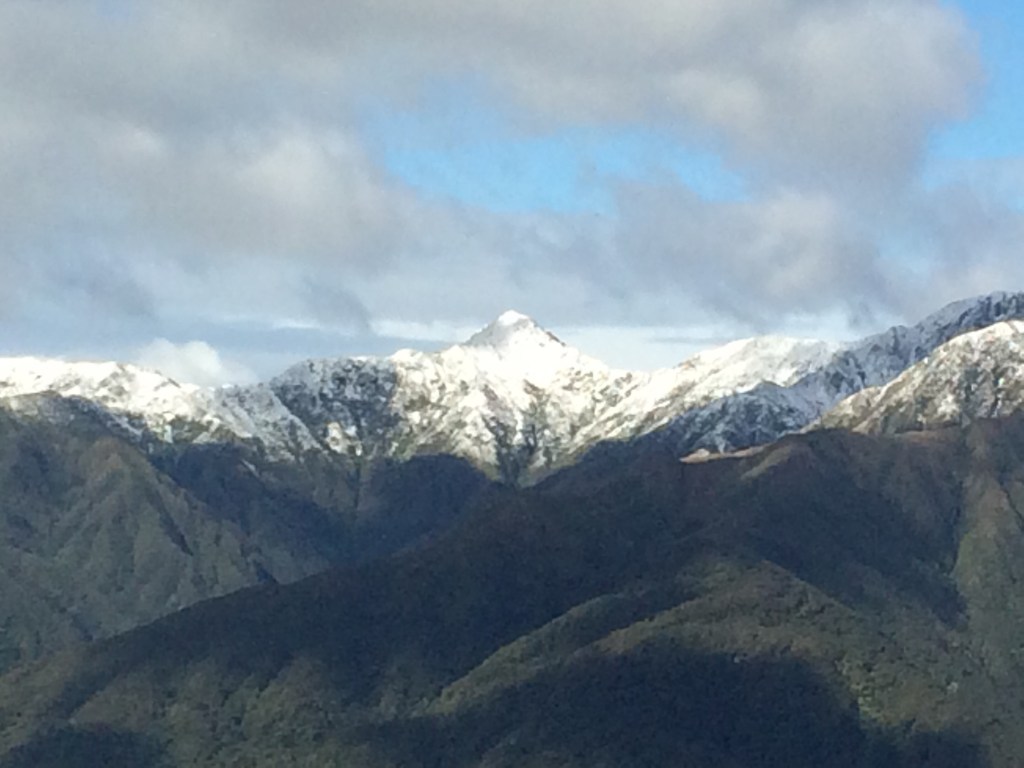
The pic below is of Pukematawai. The low spur in the central foreground is the one I would have gone up if I’d continued. You can see where it narrows to a sharp, steep line just before a small shoulder below the summit, to its right. That would have been pretty intense in low visibility and strong winds, if I’d been able to make my way up it at all, without slipping over constantly. From there the Te Araroa route turns right and goes down that snowy ridge toward Dracophyllum Hut. The peak lit up in sunshine just over Pukematawai’s left shoulder must be Arete, 1505m.
In the other direction, the sea shone off Horowhenua.
At the Richard’s Knob track junction I weighed my options for the way out. I could go around via Waiopehu again, but it would be longer and I’d already done it on the way up. The Gable End route had a slip on it, which had forced me to backtrack on the way in. But it had looked more crossable from this side, and if it wasn’t, there was a detour available via Six Discs Track. So this is the route I chose: Gable End ridge, looking north.
This is looking down off the Gable End ridge into the steep, dark gully between it and the Waiopehu Hut ridge. The stream at the bottom is Blackwater Creek.
Pukematawai was looking princely and accessible in the improving weather and I was kicking myself a bit. Thinking I should have had a crack that morning, then I’d be bowling down those south-facing slopes in the sun toward Dracophyllum right now. But I knew that was silly. I could have just as easily been stuck in ice and snow, or lost because of the morning’s poor visibility.
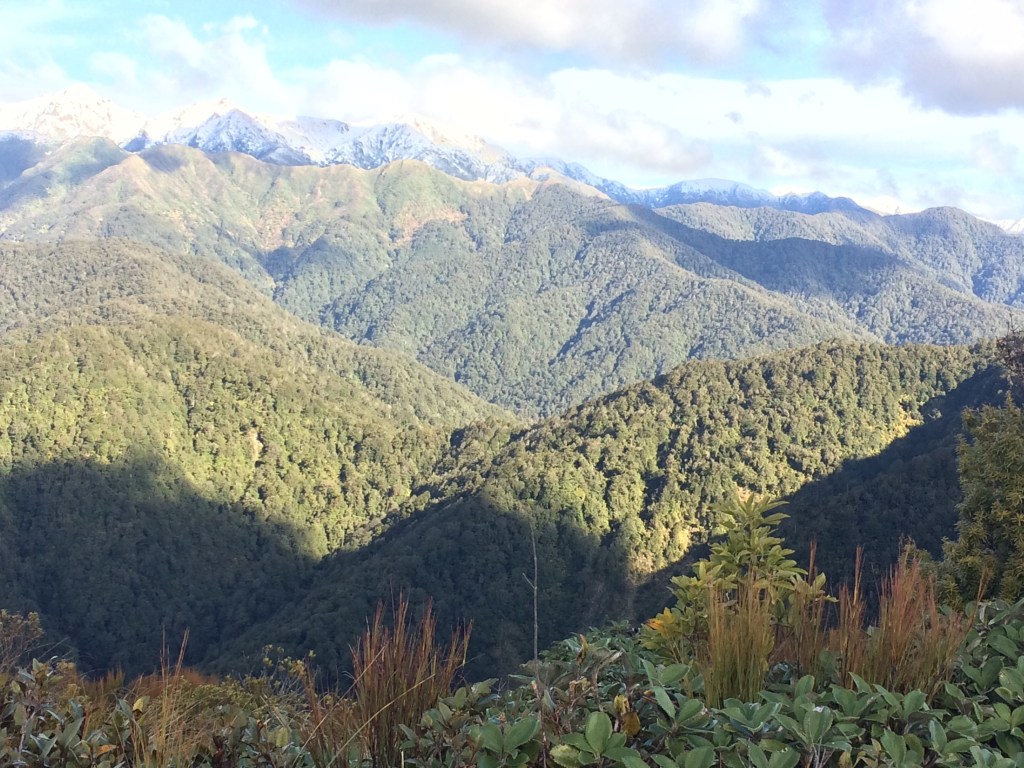
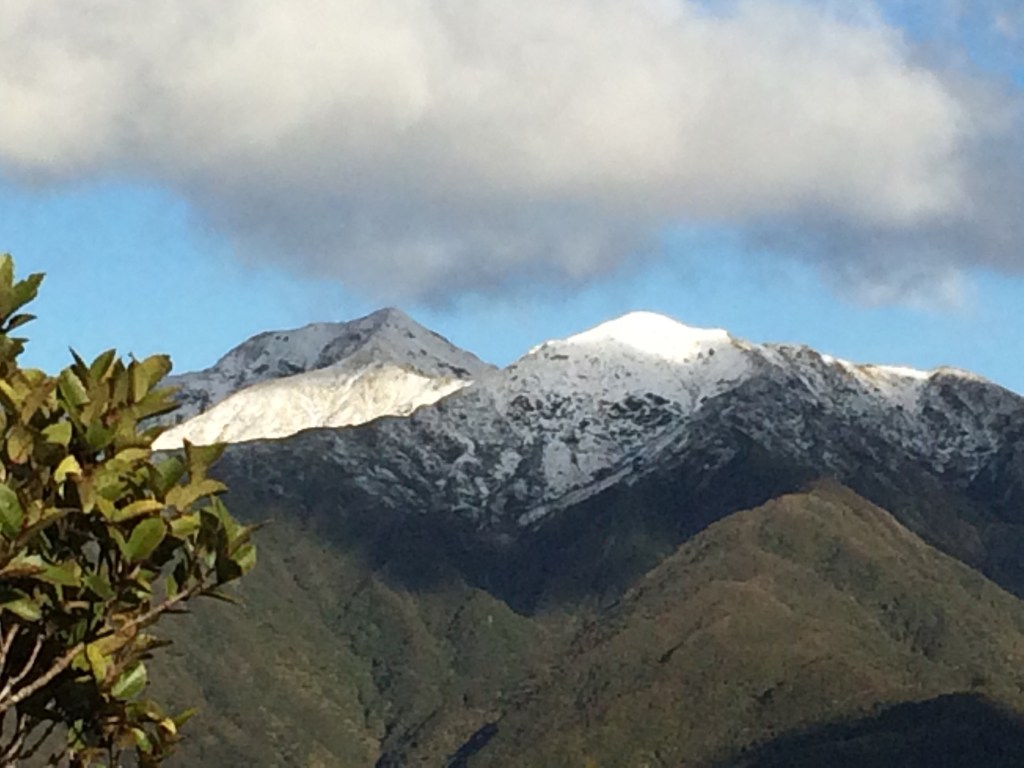
A wider view, below, shows the line of fabulous peaks that run along behind (east of) the Te Araroa route. The undulating green line below the snowy peaks to the right of Pukematawai and Arete is the ridgeline followed by the Te Araroa route; above it are (I think) from left to right, Lancaster (1504m), Thompson (1448m) and Carkeek (1435m). To the left of Arete would be the beginnings of Bannister (1537m).
In the foreground of this pic is the Dora Ridge track down into Butcher Saddle. You can see how, from the saddle, the route rises up then toward Pukematawai.
This pointy one is to the north of Pukematawai (on the left, as I was looking at it), and I think it must be Mt Dundas (1499m).
Going in the same direction, the sharp, sunlit peak to the right could be Logan (1500m) and the shadowed one poking up to the left of it, in the back, could be Dome (1410m).
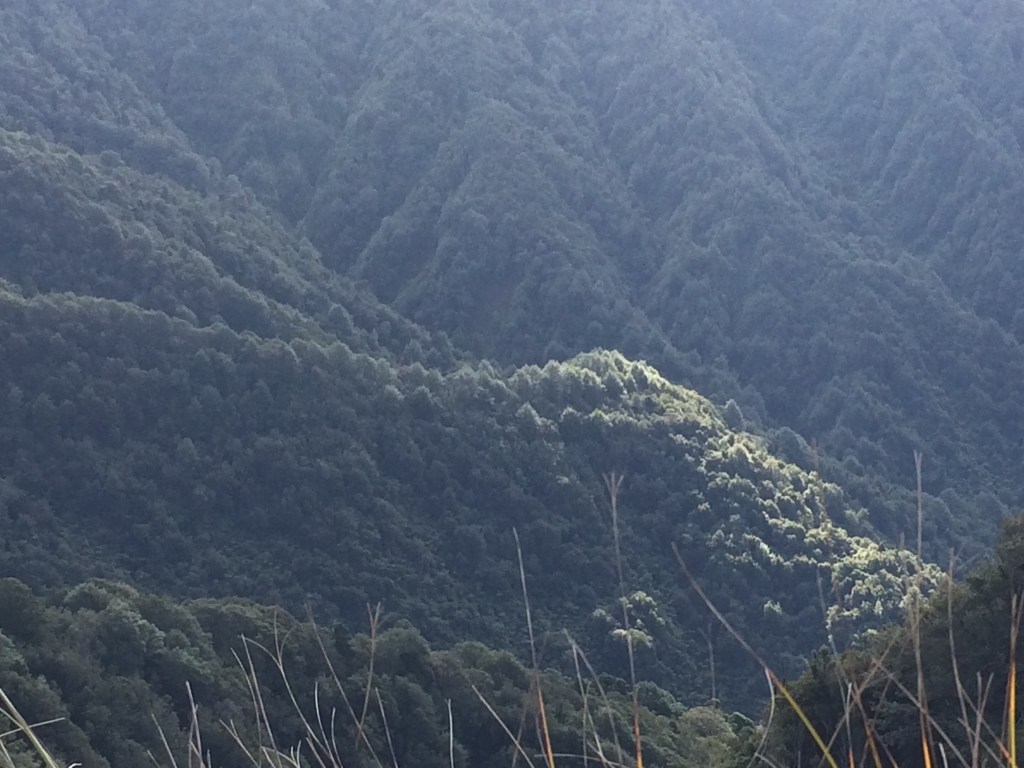
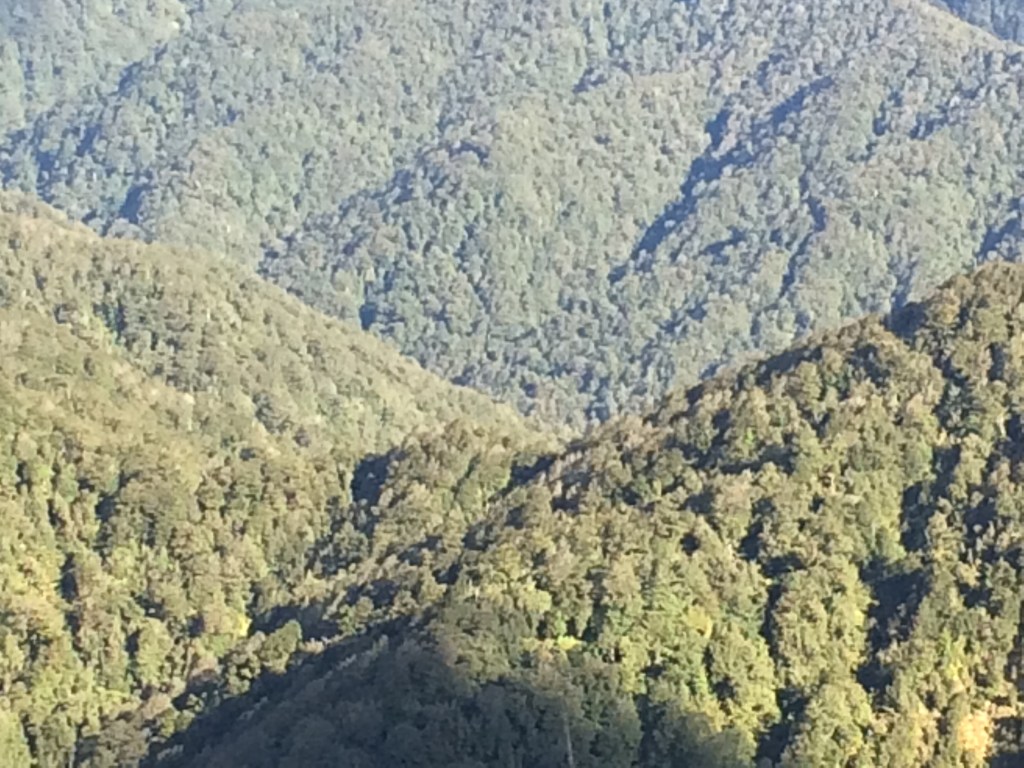
The disappointment began to lift. I decided to just enjoy this sparkling afternoon high up in the hills. For example, I always find these deep, closed-in valleys fascinating – little lost worlds, tangled, trackless places, where few humans have ever set foot. This one just touched by a single fingertip of spring sunshine.
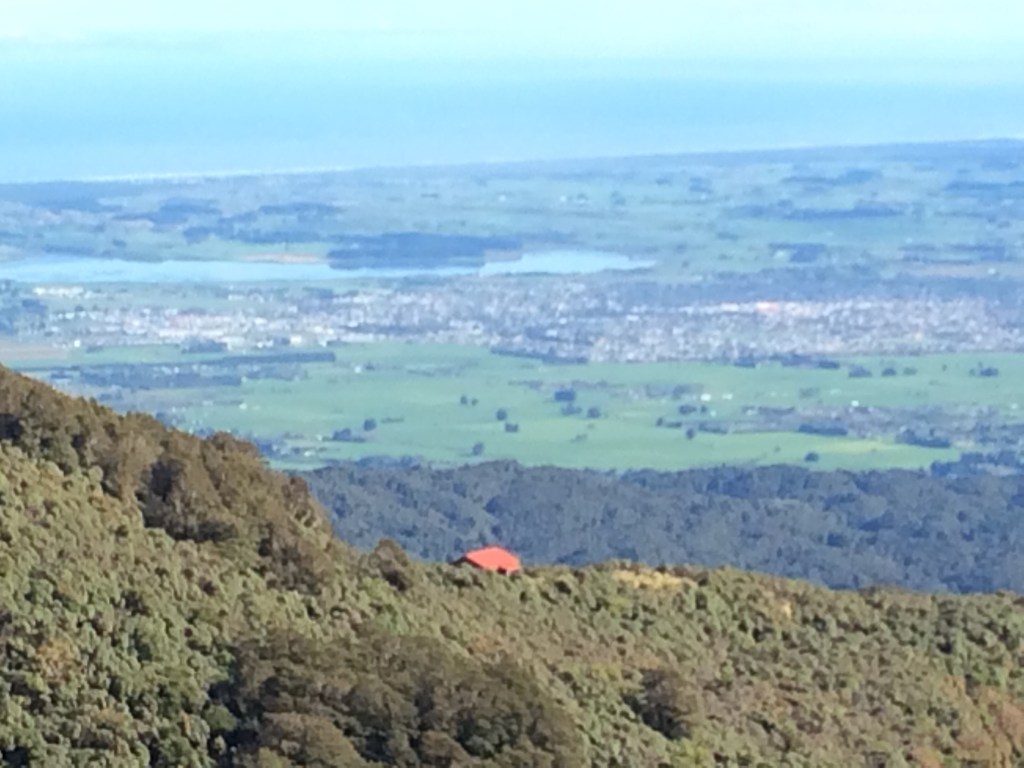
Here’s Waiopehu peak from another angle, and the hut an orange dot below it, to the right.
More goblin forest as the track slowly descended, over Gable End and toward Mayo Knob.
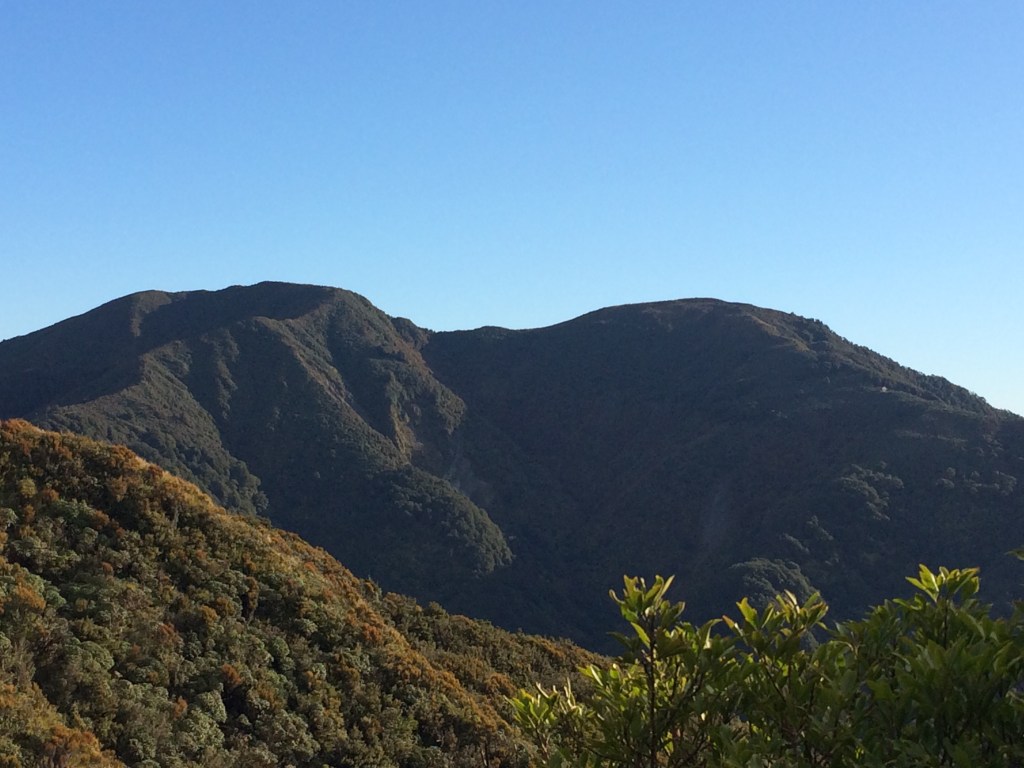
In the distance, the southern end of the ridge Te Araroa takes after leaving Pukematawai: Mt Crawford, 1462m. It looked pretty steep, icy and forbidding, too. There were gales forecast for the next day, when I’d have been trying to get over this (if I’d got that far). I supposed I’d done the right thing.
Here’s the whole line-up, looking as benign as you please. But I knew they would have been less welcoming up close.
A closer look at that undulating line of the Te Araroa route, below the peaks. This is somewhere around Dracophyllum, I think. That bit would have been very doable in this weather, pleasant even.
A close-up of Butcher saddle – you can see how it drops right down into a V. Time-consuming stuff, getting all the way down, only to have to battle up again.
I think this is where the Te Araroa ridge rises up to Nicholls peak (1275m) and hut. The snowy ridge behind is Carkeek Ridge, I think, or maybe Dorset Ridge at this point.
Here’s a close up of the Te Araroa ridge, with the likes of Thompson, Lancaster and Carkeek peaks behind it.
And here’s a better one of Mt Crawford, with the lower Nicholls on its left. It was looking more and more daunting and I became happier with my decision to pull the plug.
Kāpiti again, with maybe a bit of the Marlborough Sounds over its shoulder.
The afternoon sun began doing its amazing bush alchemy again, making everything glitter:
I had a snack, savouring one of the last of the snowy views.
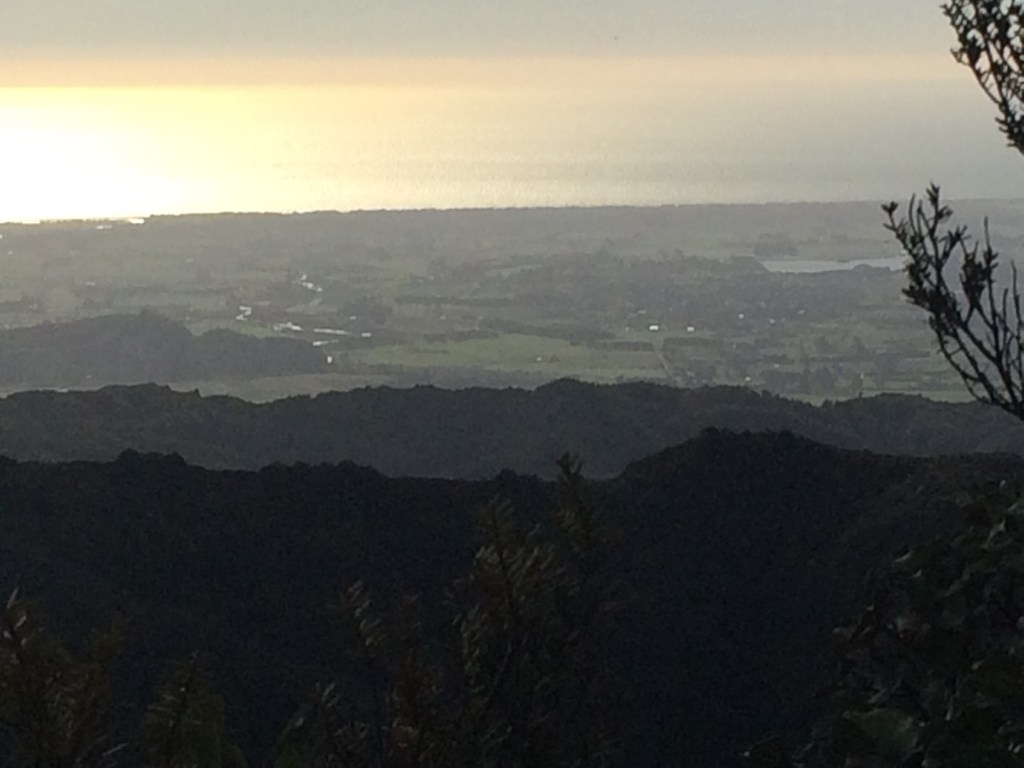
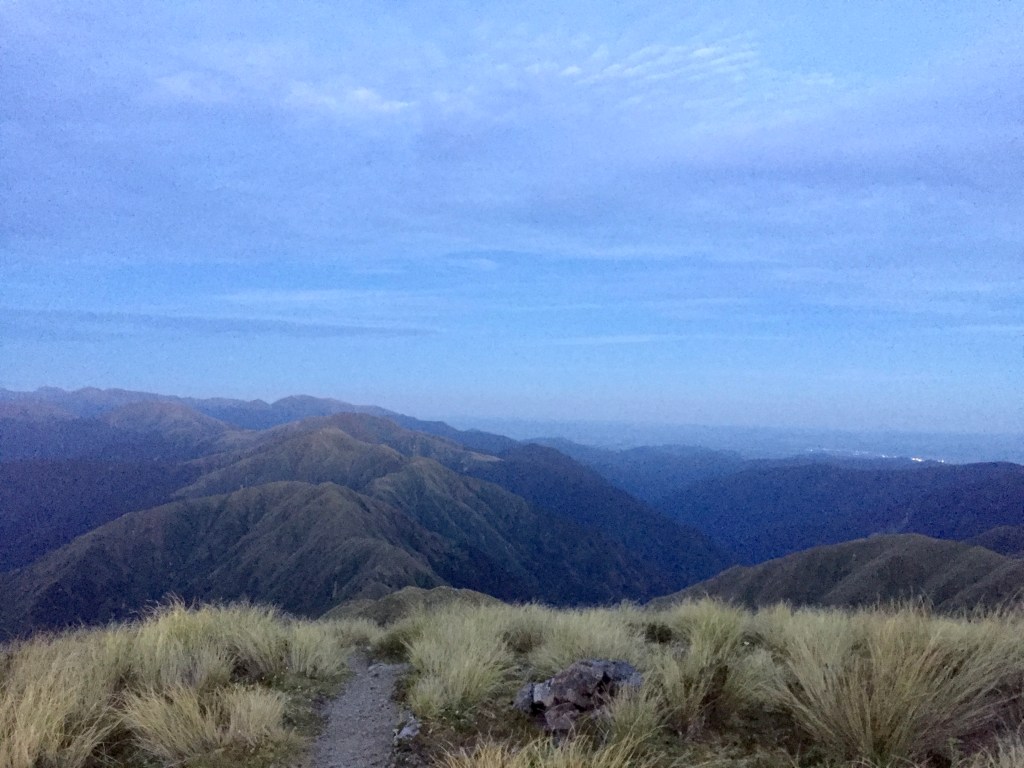
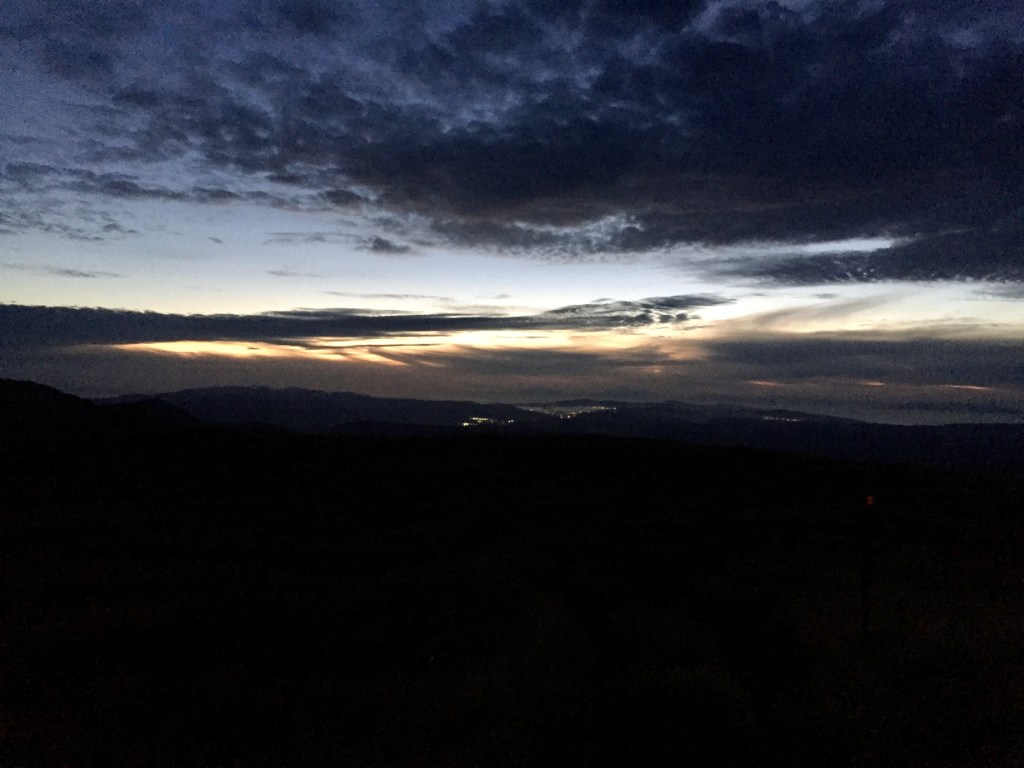
Night was coming on fast, despite daylight saving, and the sea was lighting up.
As I moved north, Arete began to emerge from Pukematawai’s shadow.
This is Waiopehu peak and Twin Peak; you can just see one of the hut windows shining, on the right.
Gladstone road valley around Makahika is the strip of green parallel to, and between, the bush-covered hills. Behind, the Horowhenua plain.
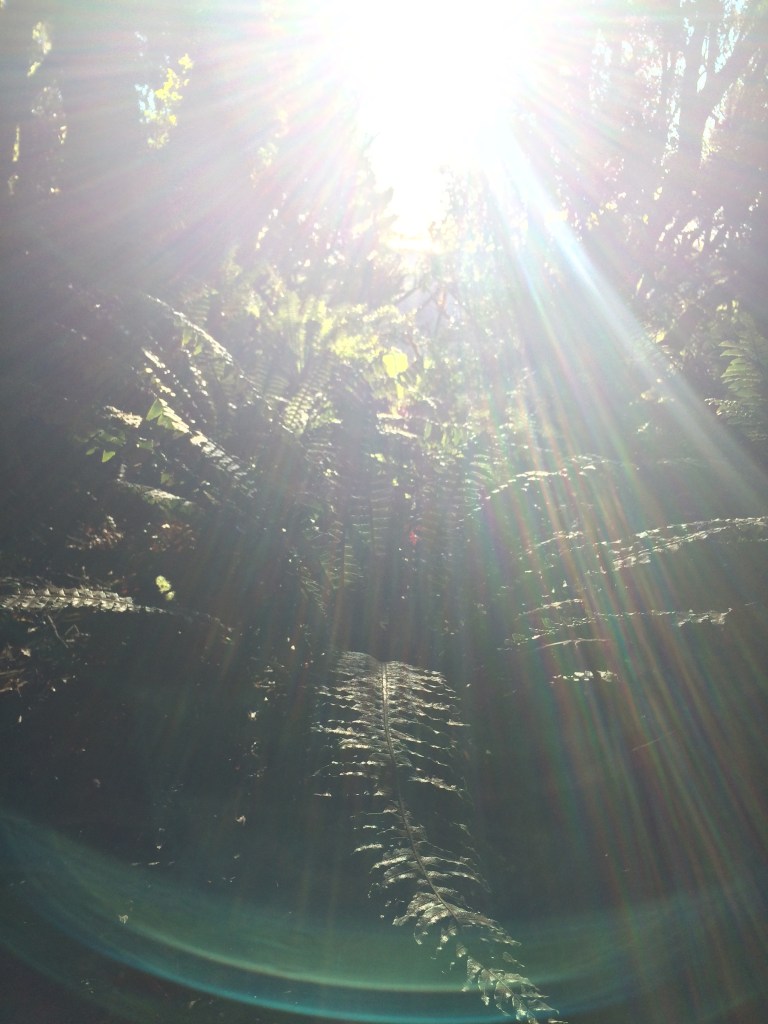
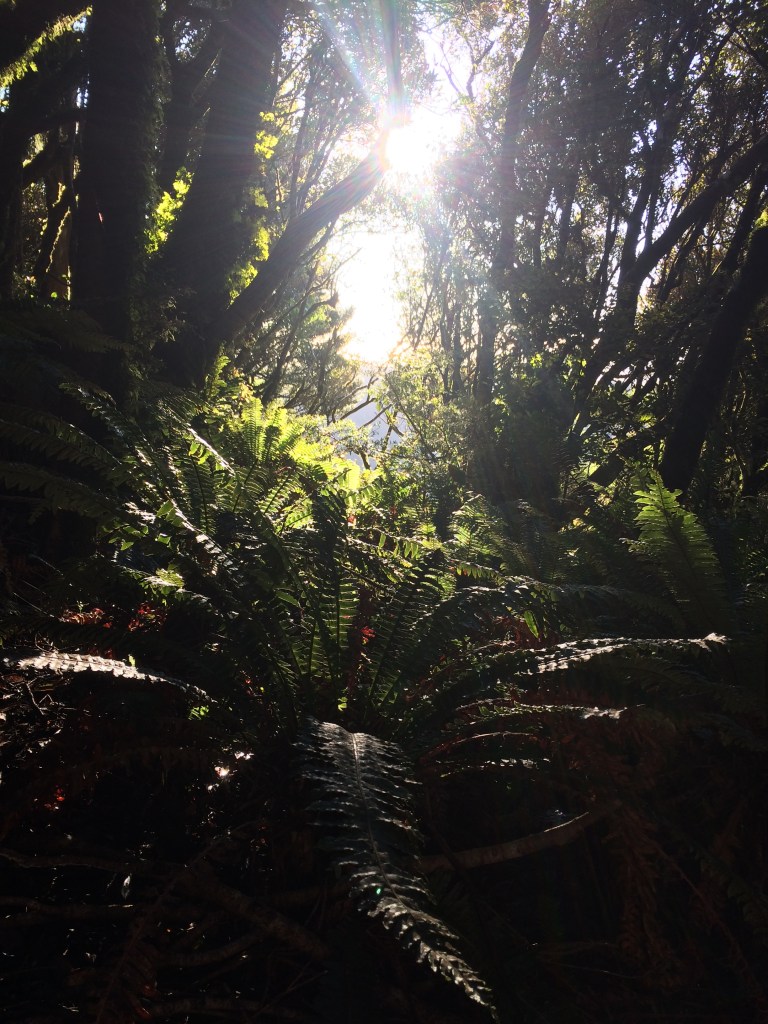
Sun and ferns and shadow.
There’s not a lot to choose between Gable End track and Waiopehu Track, although I was coming down the former and went up the latter so comparisons are a little odious. But I thought maybe Gable End was dryer, if more rooty:
I was getting lower but there was still plenty of big, mature bush, framing snowy peaks:
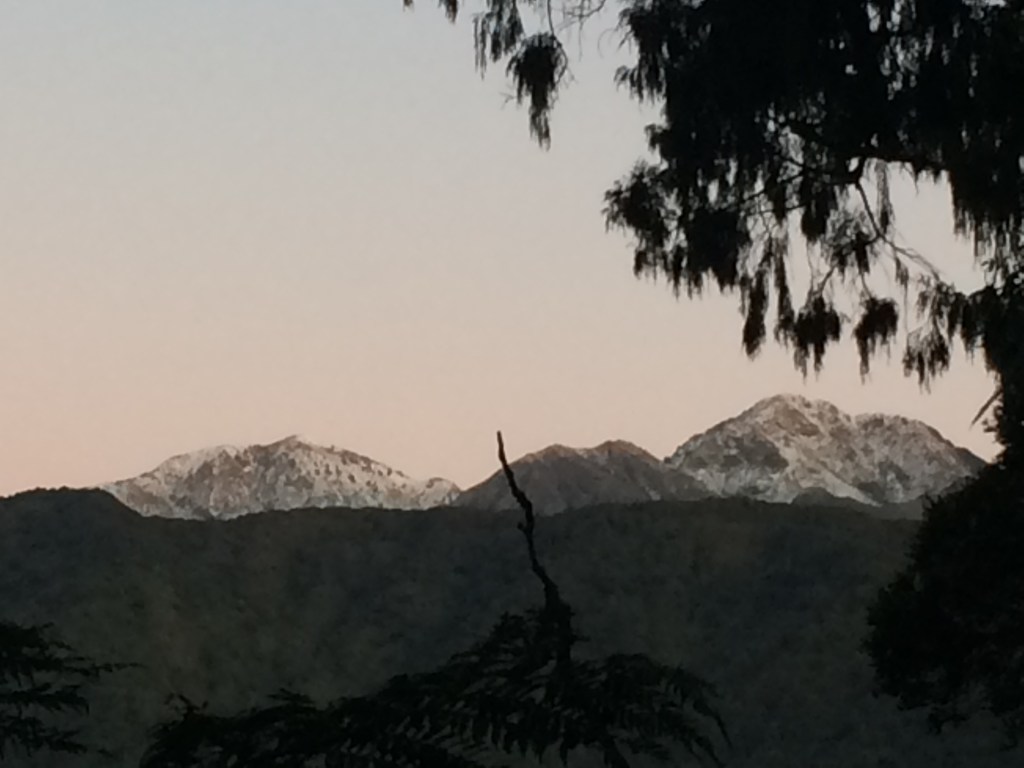
Then it was a last glimpse of peaks to the north of Pukematawai. They were briefly rose-coloured in the last of the sun, but I couldn’t quite capture it. I think this may be the two summits of Bannister, on the left and right (1537m and 1513m), with another twin summit, actually called The Twins, in the middle (1440m and 1466m). If not, it’s in their neighbourhood.
It might have just been the spookiness of the deepening dark, but I was struck by what seemed an inordinate amount of teeming growth on this ridge. It seemed a fecund, crawling, lush, overwhelmingly fertile place – trees growing on other trees, wind-fallen boles covered in saplings that shot up and off in multiple directions, vines shrouding whole immense trunks, encasing them, using them as a living scaffold to build a whole new tree.
I turned on my headtorch and felt the night shift coming on as I switch-backed steadily lower: rustlings, shrieks, large things crashing away. At times like these it’s good to remind yourself: nothing in the NZ bush wants anything to do with you.
Finally I dropped down off the steep end of the ridge and into the campsite, a grassy, flat area above the main south Ōhau River.
I’d had no water source since leaving Te Matawai so I was pretty thirsty. In the pitch dark it was a hard scramble down to the nearby Blackwater Stream, below its supension bridge. And even harder struggling back up, carrying enough water for the night.
Then I got my tent up and leaned against saplings growing from an old stone fireplace beside it to make a late dinner. A remnant of an old logging or farming operation, I supposed. I ate my noodles and drank my peppermint tea, listening to the creaking, living bush all around.
A wonky-looking possum shambled out into the grassy clearing. Ignoring me, it grazed on the grass and poked drunkenly around, presumably for bugs. It was odd how indifferent it was to me, as if stunned, and how awkwardly it crawled away after a while. I wonder if it had been recently poisoned.
I took a last long look up at the huge bowl of ice-bright stars, and turned in.
Day 92: South Ōhau campsite to Poads Road end (4km)
I had to be out by midday to meet my ride (my ever-generous parents, on a day-trip down from Dannevirke). So there was no rush, and I could enjoy a last tranquil morning in the bush. This campsite was a treat. While I cooked and ate my oats and drank my coffee, I listened to the Ōhau and the Blackwater rolling over in their beds, and the wondering warble of the morning chorus.
Then it was on, to tackle the slip. I took my time, but it was as I thought – much easier to get down onto it from this side. And once on it, I could pick out a route up the other, steeper, gnarlier side, pulling myself up onto the path with freshly exposed tree roots.
Then it was out along the 3km Ōhau Gorge track, my third time along it this week. Luckily it’s a beautiful bit of bush, and sunlit this morning.
The bush is a different beast in the sun – everything glows.
I stopped at a small stream for a last cup of tea by myself in the big, breathing forest.
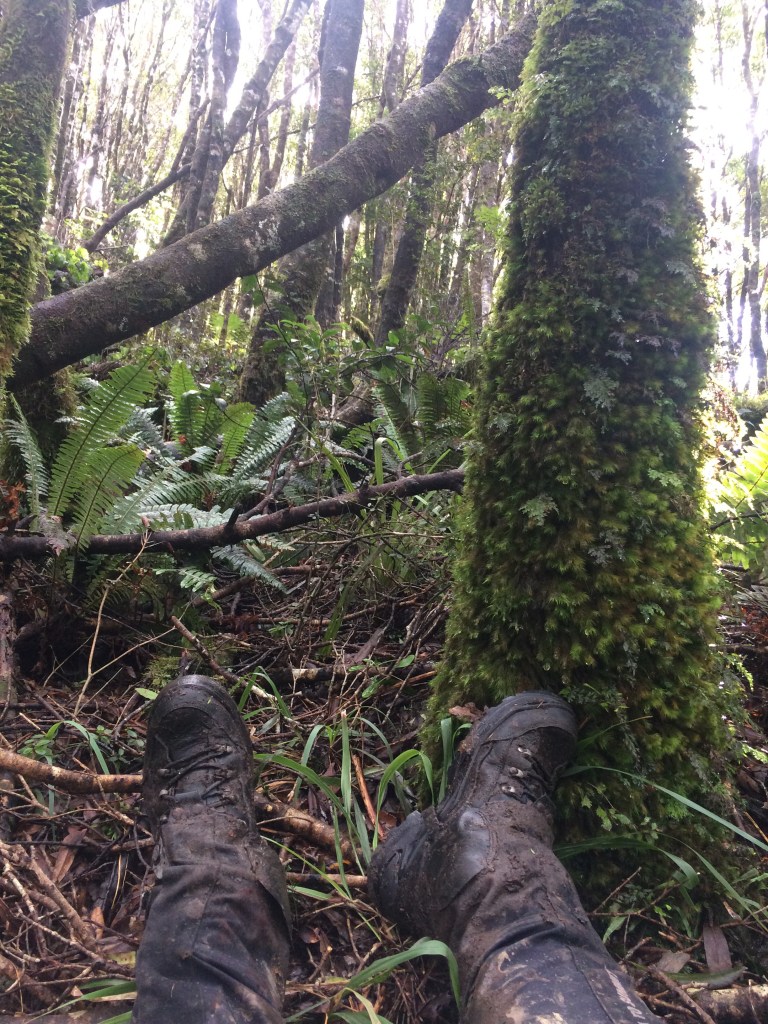
One feature of this stretch of bush, I found, was an unusual amount of epiphytes – plants that grow on other plants. Some trees were teeming with them, groaning under their weight, sometimes half-collapsed with the number of exuberant leafy hitch-hikers. Here’s a bunch that had come loose from their host under their own weight, perhaps in recent wind. Some call them widow-makers, because if they fully detached and you were underneath, it would be an unequal fight.
Then it was across farmland to the road end, my folks coming to meet me over the paddocks bearing cake and thermoses, and another adventure on the long pathway ending.
I missed out on this particular trip’s goal, but I still had an exhilarating few days immersed in the massive, ornate silence of the high country.
Thanks for reading! I’ll post about my few remaining North Island legs as soon as I’ve walked them. In the meantime, you can read previous posts, all the way from Cape Rēinga if you like, by hitting “home” at the top of this page.
Ngā mihi nui.
*Note that this and the previous post are out of sequence as regards days on the trail, as I had topostpone them until after the Ōtaki-Wellington section, due to bad weather. I’ve posted them in sequence as regards kilometres, to preserve the full, continuous, north-to-south, length-of-Aotearoa reading experience.
Day 93: Poads Road to bush campsite near road end – about 2km
*Note that the days on the trail are out of sequence between the title of this post and the titles of the previous and following posts. This is because I initially had to postpone this section due to bad weather (see posts on two previous attempts above this one). But the kilometres walked are in the correct order, to create the reading experience of a continuous north-to-south journey.
It was late December 2021, and summer was settling in. I had a week off and it looked like I’d finally be able to complete this tricky mountain section, which had eluded me twice before. It was one of the final North Island pieces remaining in my attempt to section-hike the Te Araroa Trail down the whole length of Aotearoa, north to south, as contiguously as weather and life allow. As before, I left my car at the Ōtaki Gorge road end got a lift with a transport provider, Waka, who I met via the Te Araroa trail notes.
He dropped me off at the range access point of Poads Road end, east of Levin, an hour or so’s drive north of Wellington.
He was a keen tramper too, and had asked me my plans as we drove. I’d explained how Te Araroa heads straight up to the tops from Poads Road, spends a day or so on the long ridge in the heart of the range before descending to Waitewaiwai Hut, then follows a river valley out to Ōtaki Gorge Road. He looked at me, surprised.
“In this weather? It’s going to be perfect for the tops. Do you know how rare that is in the Tararua? Instead of a day up there, you could have three or four. Why don’t you just stay on the main range the whole way?”
The main range: I’d heard of this legendary Tararua route. It describes simply walking along the tussocky tops of the longest, most central and straightest of the Tararua complex’s several long, ragged ridges. I told Waka I supposed the Te Araroa Trust prefers to send trampers out via the lower Waitewaewae route to lessen their exposure to sudden bad weather, which can be literally a killer if you get trapped on the tops. He shrugged, unconvinced. But the exchange did make me think.
There’s an info panel at the road end with a 3-D image of this whole southern part of the Tararua park; I ran my fingertip right along the long, sinewy, golden ridgeline, from the Dundas ridge in the north (near Eketāhuna) to the Southern Crossing in the south (near Upper Hutt). It looked like a sublime, secluded, wild highway, exclusively for those walking single file. It was definitely tempting.
So far though I’ve been totally faithful to the Te Araroa route that’s been carefully planned and built up over decades, hard-won by much negotiation with landowners and other stakeholders. It’s become a kind of pilgrimmage route, and not one I’d deviate from lightly. It feels like cheating. Like a short-cut.
Yet I wouldn’t be, really. If I took the alternate route along the main range, I’d actually be walking further than the official TA route – while still walking roughly parallel to it.
I decided to mull it over as I tramped.
A quick skip across now-familiar paddocks and I was in the welcoming forest. Within a minute or so I passed the turn-off for the old Te Araroa route up to Waiopehu Hut. (Te Araroa no longer uses this route, preferring the shorter Gable End one, but I did it on an earlier attempt as Gable End was blocked by a slip.) The night wasn’t far off so I found a flat spot near a creek and settled in for the night, ready for an early start in the morning.
Day 94: Campsite near Poads Road end to Te Matawai Hut – about 10 km
I had a long day to get up to my next stop: Te Matawai hut, right up on the bushline, some 700 metres’ climb – through terrain I’d already crossed on my way down from that previous attempt. So I wasted no time breaking camp. It was still fairly early by the time I was swinging along the easy, mostly flat track, with views through sunlit bush down to the Ōhau River.
Soon I was at a the big slip that had impeded me on my last attempt at this section – I’d decided then against risking a scamble across the steep washout, from which a false step could easily send you tumbling into the Ōhau. It had added several hours to my trip after I had to double back and go up the alternative route, via Waipoehu. Being midsummer this time, the slip was dryer and had less loose, muddy material on it, but it still looked imposing.
This time, though, there were two supports to get across: first, a steep track has been cut up and around the slip. Secondly, someone has knotted a fairly sturdy line from an anchor point, letting you scramble across with relative safety. I took the latter option, since it looked quicker and easier. It was still a wee bit hairy, but not too bad.
In minutes I was past the turn-off to Six Discs Track (which also goes to Waiopehu) and over the swing bridge leading to the South Ōhau campsite. I scrambled down under the bridge into the Blackwater Creek to fill up my bottles. There’d be no more water until Te Matawai Hut, a good six or eight hours of climbing ahead. Here’s the bridge seen from the creek:
Then I was grinding up Gable End track, steep and tough. Last time I was here I was coming the other way, swinging down from the snowy tops in the near-dark. I was struck both times by the exuberance of this particular stretch of bush. How the trees crowd up out of the ground. How the body of a fallen behemoth seems to have barely hit the leaf litter before getting swamped by upstart saplings:
The epiphytes, too, are impressive – great vertical carpets of them:
The mud is as relentless as the vegetation and the gradient:
But, on all sides, there are small and perfect consolations.
Mostly through low bush, with occasional open stretches, I made my way over Mayo Knob (666m), Gable End (903m) and Richards Knob (985m, named for a tramper killed nearby on an expedition.) Then it was the pain of losing quite a lot of that hard-won height heading down into Butcher Saddle (690m). Only to have to slog laboriously back up on the other side.
It was heavy going, lugging several litres of water and a week’s worth of food up the range. Especially over ground I’d already covered. But I kept grinding and right on nightfall made it to Te Matawai Hut (900m). The winter before I’d spent one of the coldest nights of my life in this cute little shelter, before bad weather forced me to pull the plug on that attempt.
I ate my noodles and perused the hut book to get an idea of what lay ahead. “Deep tussock plus deep mud = dead inside”, one tramper tersely noted.
I took a pensive sip of peppermint tea and turned to a tramping club’s annual mag. “Do you know why you tramp? You’ll say it’s for the views or the company. But in fact, neither can be counted on. I know why you really tramp. It’s because you like suffering.”
On that note I turned in early, ready for the painful delights ahead.
Day 95: Te Matawai Hut to Dracophyllum Hut, 8.5km
It was a damp, chilly morning, the last of a stretch of bad weather before a forecast long stint of golden days. As I climbed up the narrowing ridge from Te Matawai toward the main range, sunlight found its way more and more through low cloud.
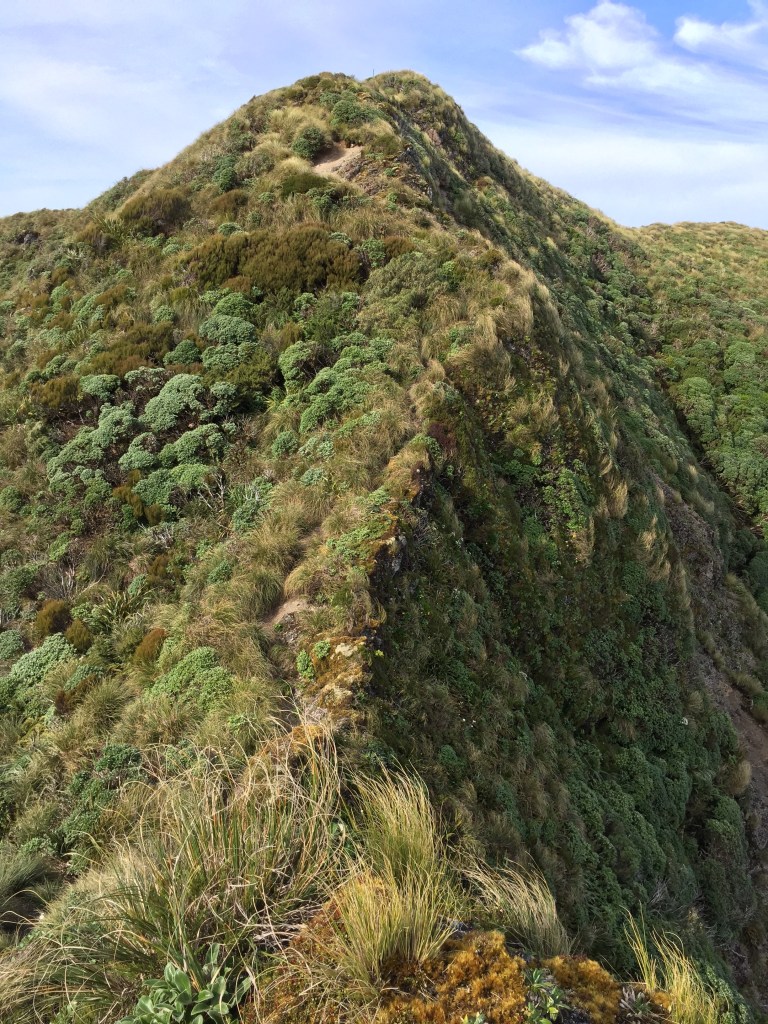
It’s a steep pinch up to Pukematawai (1432m), and often razor-backed. I was glad I hadn’t tried to tackle it the year before, when it had been under thick snow.
There was an icy breeze at the top so I hunkered down for lunch on the lee side, with a view past wildflowers down into Park Valley.
A quick detour through clag to the top of Pukematawai yielded no clear view of nearby Arete, a well-known peak I’ve seen from afar but never up close. In fact, there was no clear view of anything. So I was soon heading south again along a very up-and-down ridgeline.
This sort of tramping is pretty brutal – you’re constantly going either steeply up or steeply down over slippery, uneven ground and it’s hard to find a ground-covering rhythm. Being a section-hiker, rather than doing the whole length of the country in one hit, means you have to start from scratch on your trail fitness each time. So I was soon feeling pretty battered. But Butcher Knob (1158m) loomed through the mist, making a good target:
After that the track goes in and out of low alpine bush, with some great views as the cloud lifted, across the Horowhenua plains to the Tasman Sea in the east. That orange dot in the foreground is Te Matawai Hut:
The ups and downs just kept coming. It was a long afternoon:
Some consolation was in the continuing, sweeping views down into Park Valley, a fabled landmark, route and playground I’ve often heard of but never, as far as I can remember, gazed upon:
Mounts Nicholls and Crawford, the next day’s destination, slowly emerged in the distance. I love this aspect of tramping – how by dint of constant, arduous effort, the land slowly unfurls in front of you.
Finally I reached Dracophyllum Hut, cosily nestled at about 1100m in goblin forest. I was delighted to find I had this sweet little two-bunker all to myself for New Year’s Eve.
Or so I thought, until a lean and steely looking figure came loping out of the twilight. But he was only stopping for water, it turned out – he was running a totally insane, long-distance route called the S-K Traverse. He told me about it while he rehydrated and I eyed his tiny pack, containing only an ultralight stove, wet-weather gear, thermals, a sleeping bag and some dehydrated food. S-K is about 80km, goes down the whole of the Tararua Main Range and stands for Schormann to Kaitoke. The starting point is named after a now-defunct track up from Putara Road near Eketāhuna in north Wairarapa, and it ends at Kaitoke, near Upper Hutt.
It’s become a legendary route that people complete in 24 hours: to me, a barely believable feat. But it’s a thing.
This guy had started running early that morning, would bunk down in Nicholls that night (he was aiming to be there by 10pm or so), then run out to Kaitoke on New Years Day. In two days, he was covering what would have taken me, at my usual stately pace, a solid week. He shrugged gently at my amazement, and with a flash of teeth and heels was gone into the evening.
Still shaking my head, I hung up my gear, wet from camping out the first night, in the last of the sun.
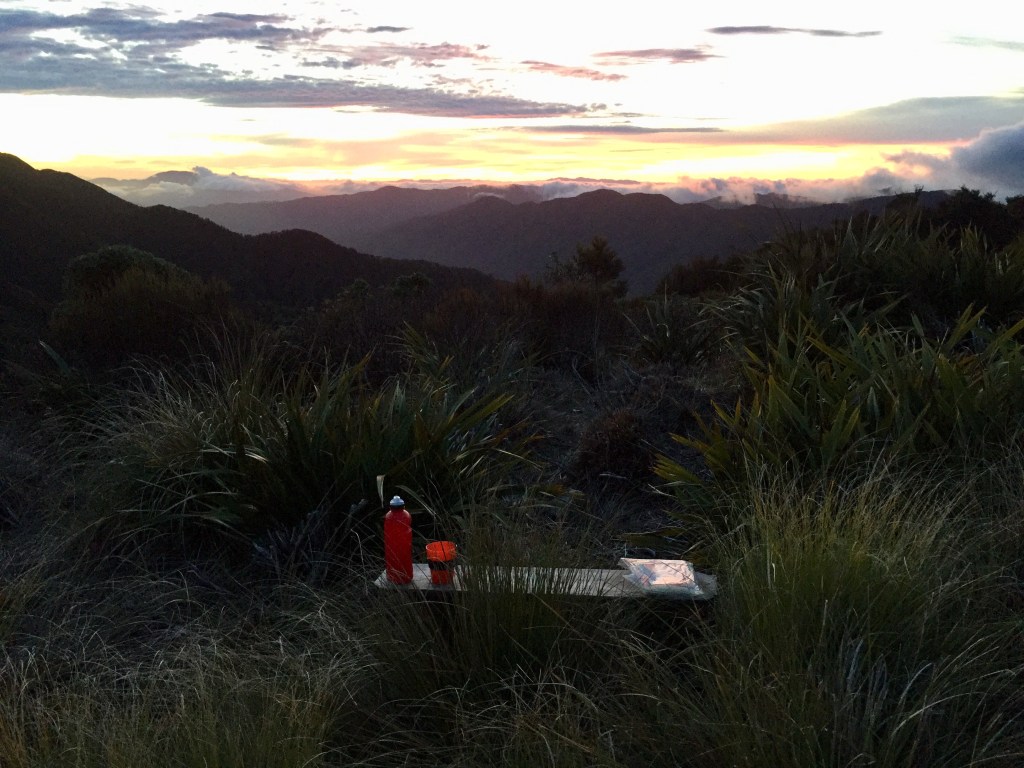
I got myself set up inside before heading up to the hilltop just above the hut to take in the last sunset of the year. It’s really a neat little whare.
From the top of Dracophyllum Knob (1117m) I took in the mountains all around, golden in the last rays of 2021. To the north were Pukematawai and Arete; to my east, Carkeek Ridge including the peaks of Thompson (1448m) and Lancaster (1504m).
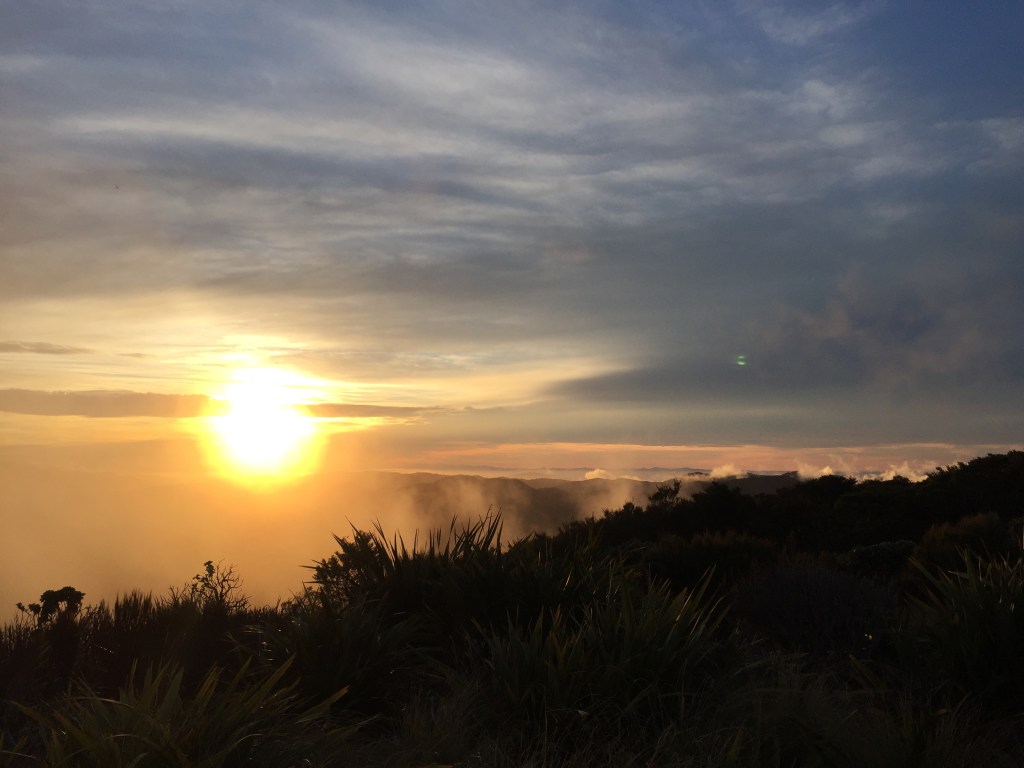
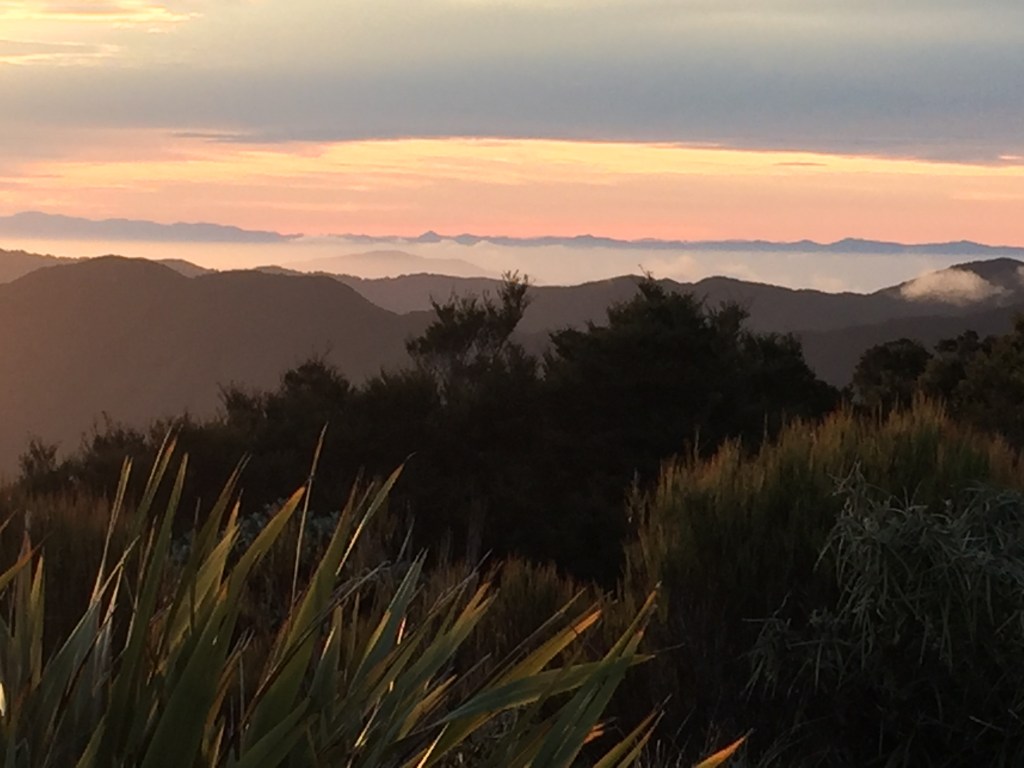
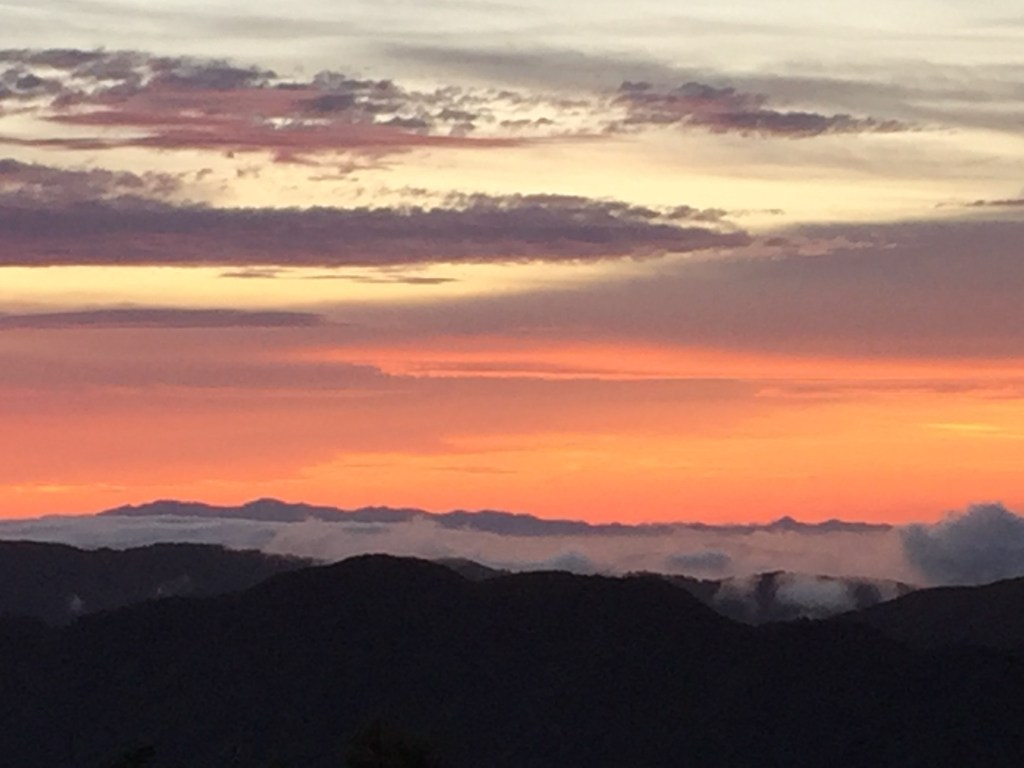
To the south-west, the sun went down in splendour above Cook Strait.
Thick cloud slowly filled the strait and the valleys and plains. Beyond on the horizon, back-lit in rosy hues, were the hills around the Marlborough Sounds. Next to me, the harakeke shone.
Here’s my route ahead the next day, along the main range toward Mt Crawford, which is capped in wispy cloud.
Watching rose turn gold on the last evening of what had been a heck of year, I thought about the people dear to me, and their links to places dear to me. That lead me to thinking about the original people of this special place, and their ongoing links to it as owners, guardians, users and travellers. All the sunsets and centuries they have seen go by from vantage points just like this. Who graciously allow trampers access. Who guard all this beauty and who have known it deepest and longest: Te Atiawa, Te Atiawa ki Whakarongotai, Ngāti Toa Rangatira, Muaūpoko, Ngāti Raukawa, Taranaki Whānui ki te Ūpoko o te Ika, Ngāti Rangitāne and Ngāti Kahungungu.
I’d lugged in a hipflask, and with a wee dram I toasted them, and the last of the sun.
Day 96: Dracophyllum Hut to Nicholls Hut, 5km
That kilometre count for the day doesn’t sound like much, but given that most of it was either steeply up or steeply down, it was a long, tough day.
The morning sky was clear and hard, promising heat. Behind me, Arete peered over Pukematawai’s shoulder, watching me go.
To the east, the Broken Axe pinnacles between Jumbo and the Three Kings, a hair-raising but exhilarating route I did by myself a few years ago:
The route ahead – a long, forested ridge leading up to Nicholls and Crawford:
But first, I had to go over several obstinately steep and unrelenting “bumps”. This prosaic tramping term conceals a sweaty reality, involving scrambling down, and then back up, then down, ad infinitum. It’s a type of tramping that can feel very Sisyphean. Here’s the first of these awkward but spectacular bumps, Puketoro (1152m):
Then it was over the shoulder of another rough old bump, Kelleher (1182m), with a quick detour to its summit. Then down and along the long bushy ridge, and a long grunt up, up, up onto Nicholls. That’s where I took this next shot, looking back the way I’d come over the past two days, all the way to Pukematawai on the horizon (to the right). To the left, just beyond the bushy ridge, is Kelleher.
I’d got away early and felt like I’d already had been a long, hot, hard day, but it was still only mid-afternoon. Below was Nicholls Hut. I had time to carry on over Crawford, but I was out of water and there was none on this sun-baked ridge. Down to Nicholls and its rainwater tank I went.
As you can see in the foreground of the pic above, Nicholls is securely tucked in a sheltered valley, with stunning views eastwards down the Waiohine River valley to the Wairarapa and the Aorangi Range. A gem of a hut.
It looks onto one particularly striking, craggy face – McGregor, I think:
Around the water tank, a stunning crowd of flies milled in their thousands. Inside, it was cooler, still and quiet. I lay on the bank and rehydrated, watching the sun slowly move down the mountains. To stay, or carry on? I was dried out, bone-weary and not very trail fit, and too tired to decide. I dozed off.
When I woke up I still had daylight left. What to do? It was a hard decision. I had to get out to the Ōtaki Gorge road-end in time to get to work, three days hence. I had a long window of perfect weather and a detour along the main range beckoned. But would I have the energy, not to mention the time? I lay there and drank water and considered.
Normally I don’t like deviating off the Te Araroa standard route, but this would be a noble exception.
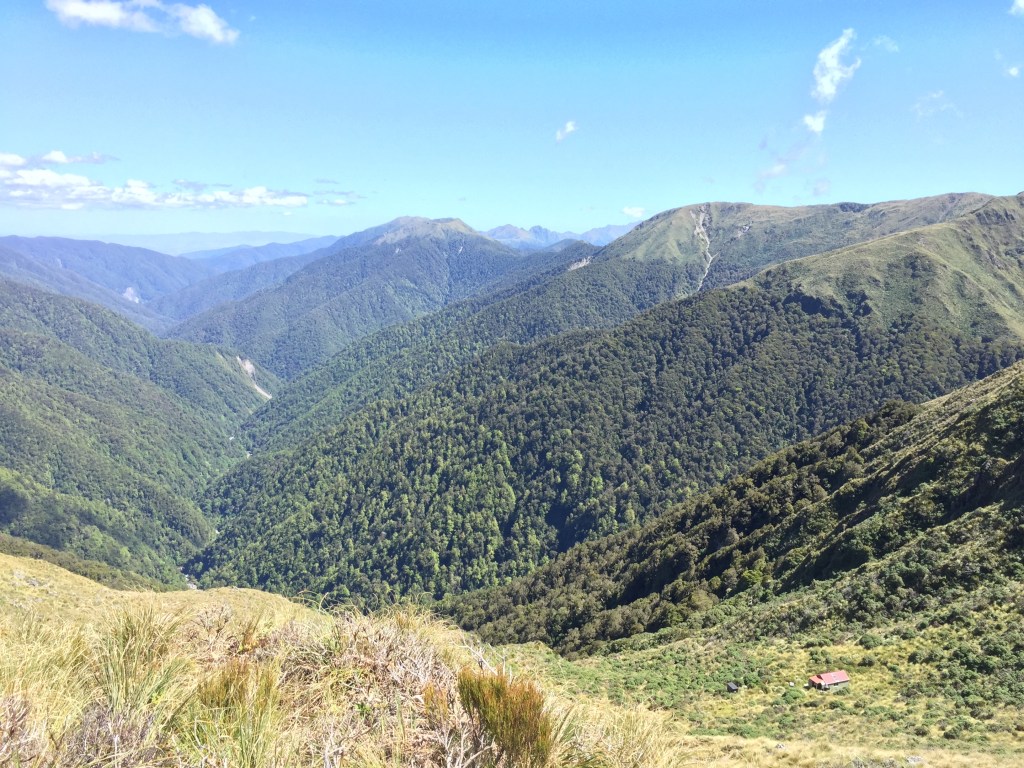
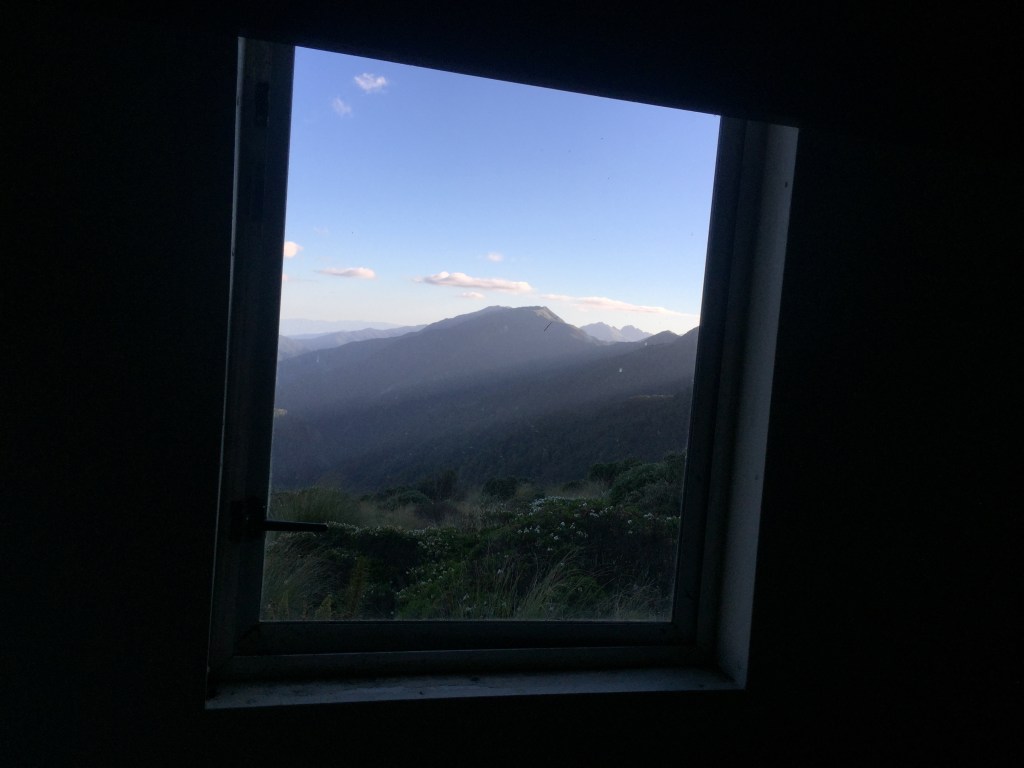
The day had taken a toll. I decided to sleep on it. All evening through the hut window I could see the main range’s most famous highlight, the legendary Tararua Peaks, beckoning me. They’re the lighter coloured twin peaks on the right of the bigger, darker peak in the centre of the window – Aopkaparangi, I think.
Beyond, below the setting sun, lies the Aorangi Range in southern Wairarapa.
All night as I slept, those near-vertical, legendary peaks swayed in and out of my dreams.
Day 97: Nicholls Hut to campsite on Aokaparangi, about 11 km
In the morning I still couldn’t decide. Alternate routes are a thing in the long-distance hiking community – not sticking slavishly to an established route if there’s another way that offers something special. But for me, sticking to a carefully crafted and curated trail has a certain charm. As if Te Araroa is a latter-day Camino de Santiago.
But then – even the Camino has alternates. Over the centuries different ways to reach the same objective evolve, each with their respective stories and traditions.
I’d resisted alternates for the whole journey so far, all the way from Cape Rēinga. But this main range opportunity seemed too good to pass up. You simply can’t do it in in poor weather – too dangerous – and I had a window of the most perfect weather imaginable.
However, I risked being late for work if I went the longer way. And I hate rushing in the back country. I’d decide on top of Crawford, I thought. I said goodbye to the thronging flies and to the otherwise peaceful shelter of Nicholls Hut:
Once over the shoulder of Nicholls it was an often-thrilling , steep and narrow causeway up toward the top of Crawford. It was another banger of a morning and the views were immense. Here’s Mt Ruapehu, with a white flash of snow or cloud or both, on the horizon. This is looking north, beyond Oriwa Ridge and over a slice of Tasman Sea:
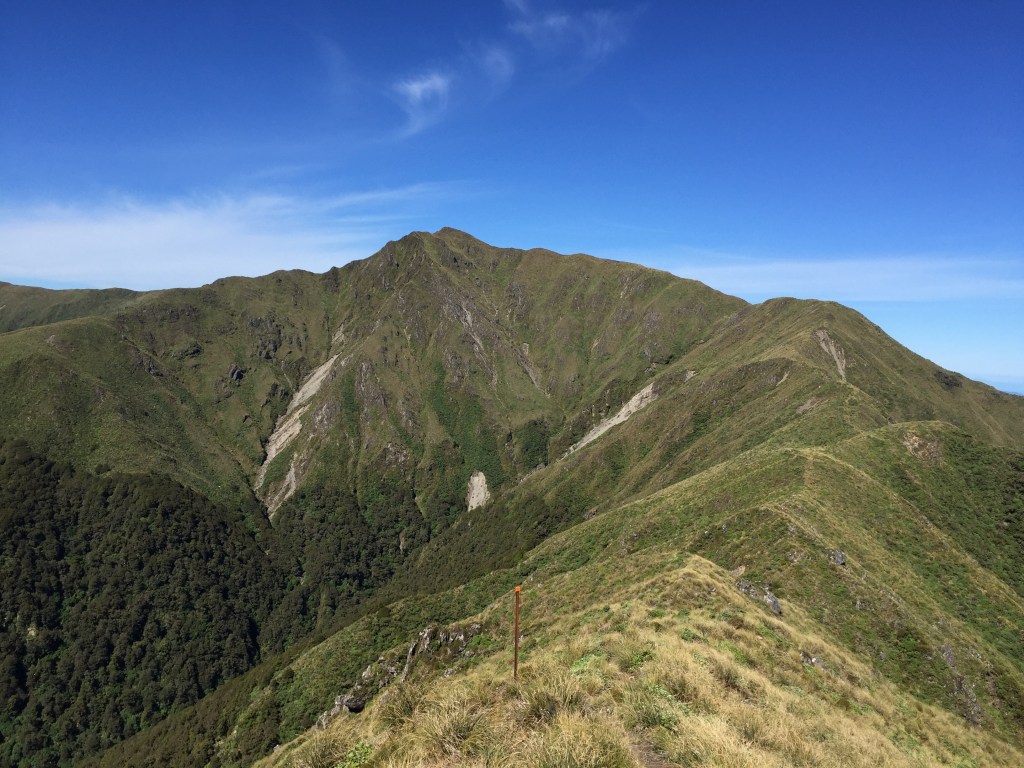
And here’s the route up the side of Crawford, the summit in the centre:
To my south-west, Kāpiti Island, with the Marlborough Sounds and Tasman Bay beyond:
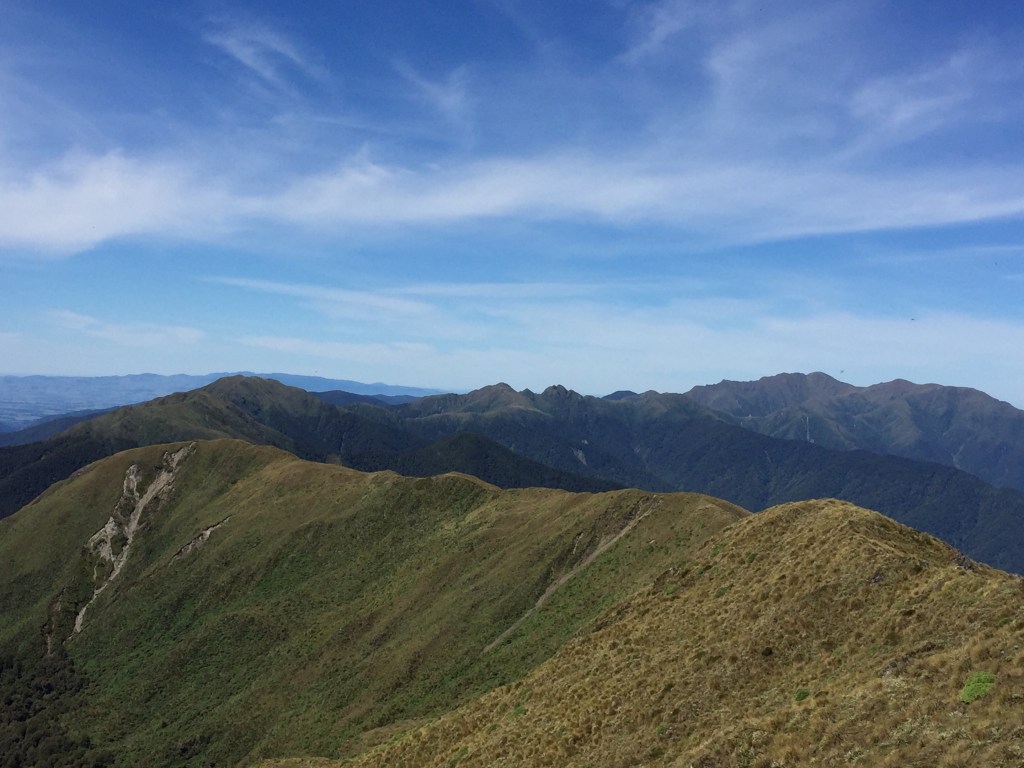
The next pic, below, is from near the summit of Crawford (1462m), looking south-east, along the main range. It shows the alternate route I was contemplating.
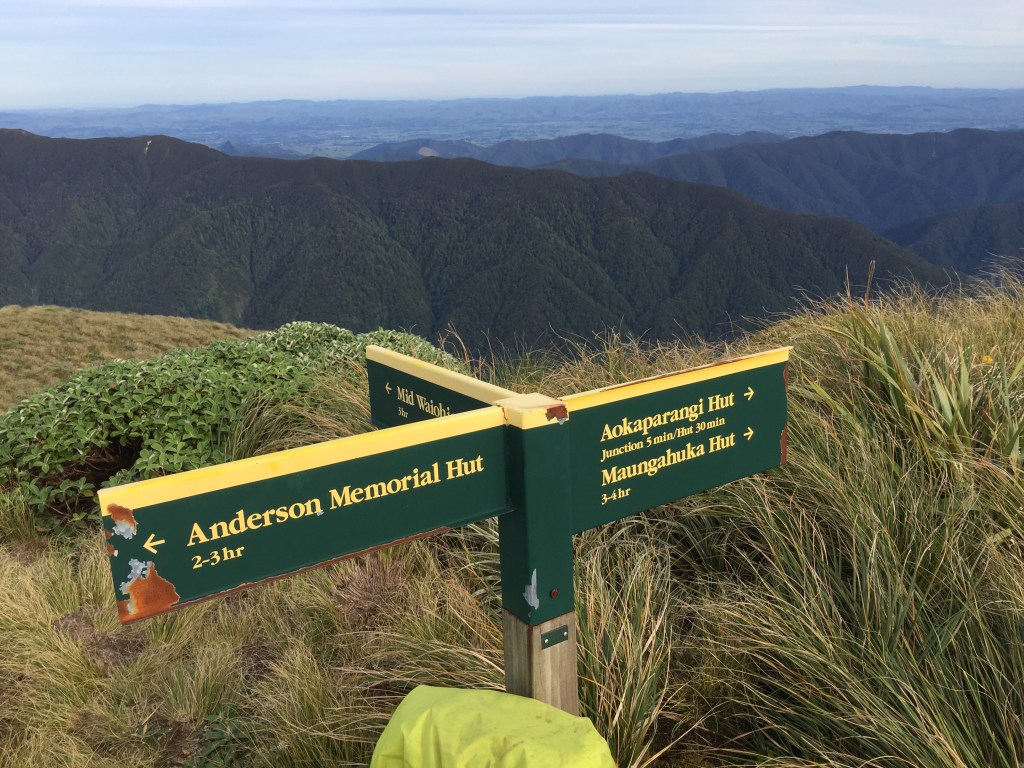
From here that route goes down past Junction Knob (1375m), past Anderson Memorial Hut, then along that exposed, high ridge over Kahiwiroa peak (1320m) and Aokaparangi peak (1354m) to Maungahuka Hut and peak, and on.
The standard Te Araroa route, meanwhile, heads off Crawford here via Junction Knob and Shoulder Knob, down to Waitewaewae Hut, then runs along a couple of valleys roughly parallel with the main range, out to Ōtaki Forks. Easier, quicker, but could I bear wasting such a spectacular opportunity for tops travel?
I stood at the signpost at the fork in the path on Junction Knob and thought it over one last time.
All those open, clean, tussocky tops beckoned.
It was too good a chance.
I took the path less travelled by.
I made it to snug little Anderson Memorial Hut in time for a late lunch.
Then it was back into bush along a low ridge, before another slog, this time up onto the golden, tawny flanks of Kahiwiroa. The main range route was unspooling in all its grandeur now, like some kind of private suspended path between the sky and the earth. A long, high lane:
From a distance these rugged peaks with their savoury, mouth-filling names look soft-shouldered, easy. The ridge-line route appeals as a tussocky staircase or even escalator. But up close the reality of the likes of Kahiwiroa is gnarlier:
The long summer day was drawing in, and Aokaparangi was still a dauntingly long way off:
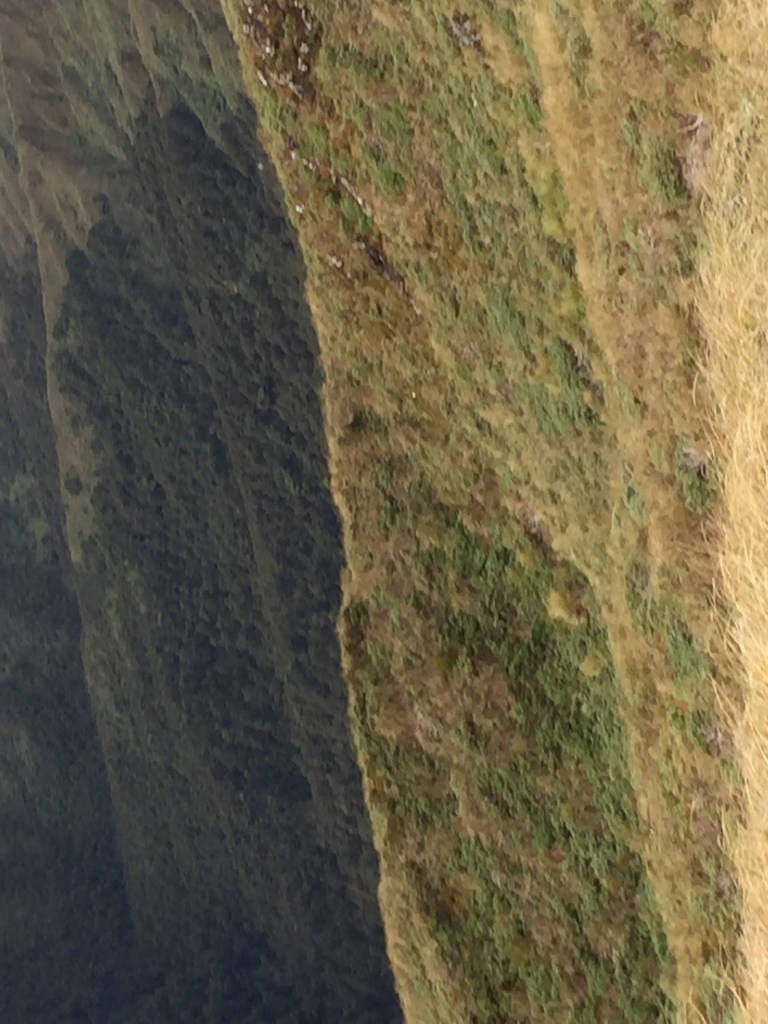
It was hairy at times. This next shot is taken looking straight down the side of a razor-back ridge:
Finally I was on the final, steep approach. There’s a hut below the summit of Aokaparangi and the long, warm twilight would get me there before dark.
But that ridge just seemed to go on and on, refusing to submit to my stride.
Finally I neared the junction where a spur goes down to the hut.
I was footsore and dehydrated but I’d made it. It’s a wonderful spot for a hut, right on the bushline in a remote, silent, magnificent place, a good two days’ walk from any road. As I drew near, though, I heard voices and my heart sank. It’s only a two-bunker and I could already tell they were both taken.
The couple with two kids in occupation were really nice though, chatting to me as I filled up with water from the hut’s tank and helping me find this nearby, pristine camping spot. Hard to complain, in the end:
I ate my noodles and drank my liquorice tea and watched this glorious carry-on:
Day 98: Aokaparangi campsite to Kime Hut, about 11.5 km
Over breakfast, I watched the dawn light shine on the Pacific. It was enough to drown out all manner of aching bones.
On the map, and from the peak of Aokaparangi, the route to Maungahuka looked straightforward. A nice, clear ridgeline, like a steepish hallway you’d saunter up. I’ll just bowl along to Maungahuka for morning smoko at the latest, then along to Kime for a late lunch, I thought. But the path was full of those infamous Tararua bumps, including two actual, named peaks which I’d completely overlooked – Wright (1196m) and Simpson (1174m). And in the way of these things, each of them involved a painful, slow, precarious slog up, then an equally tough slog down, then up again, and so on. Marvellous to look at and tramp among but, but saunter over them? Smash them out before morning tea? Yeah, nah:
But man, was it a spectacular morning to be alive, and out in the back country, picking my way along the high spine of the land:
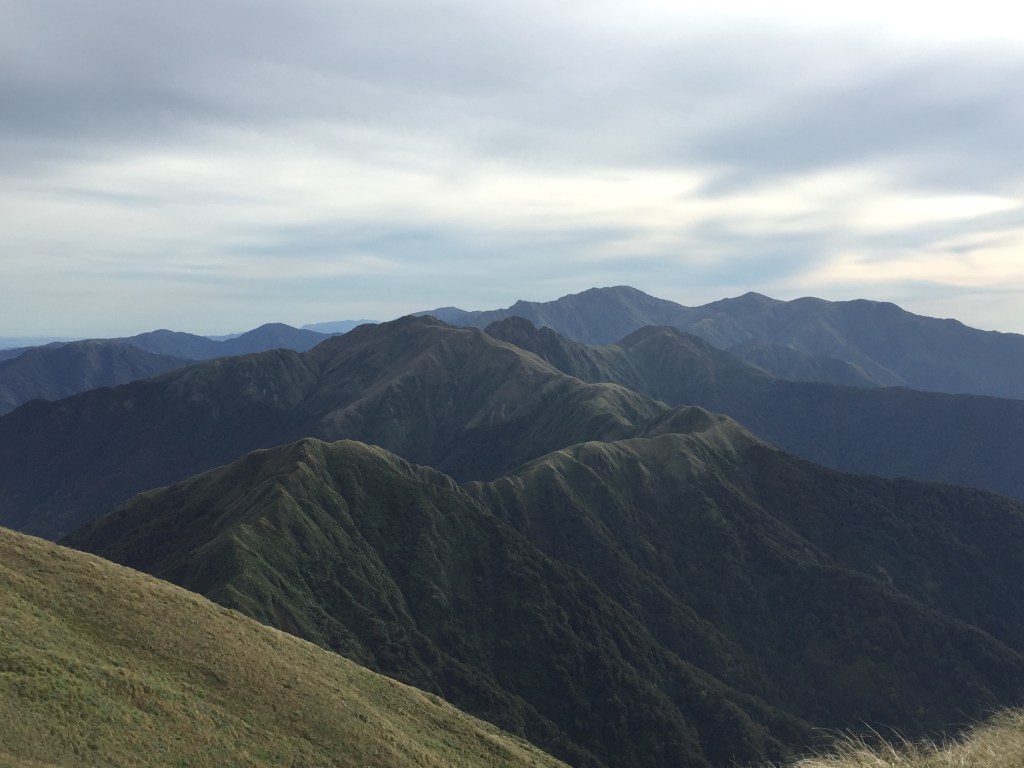
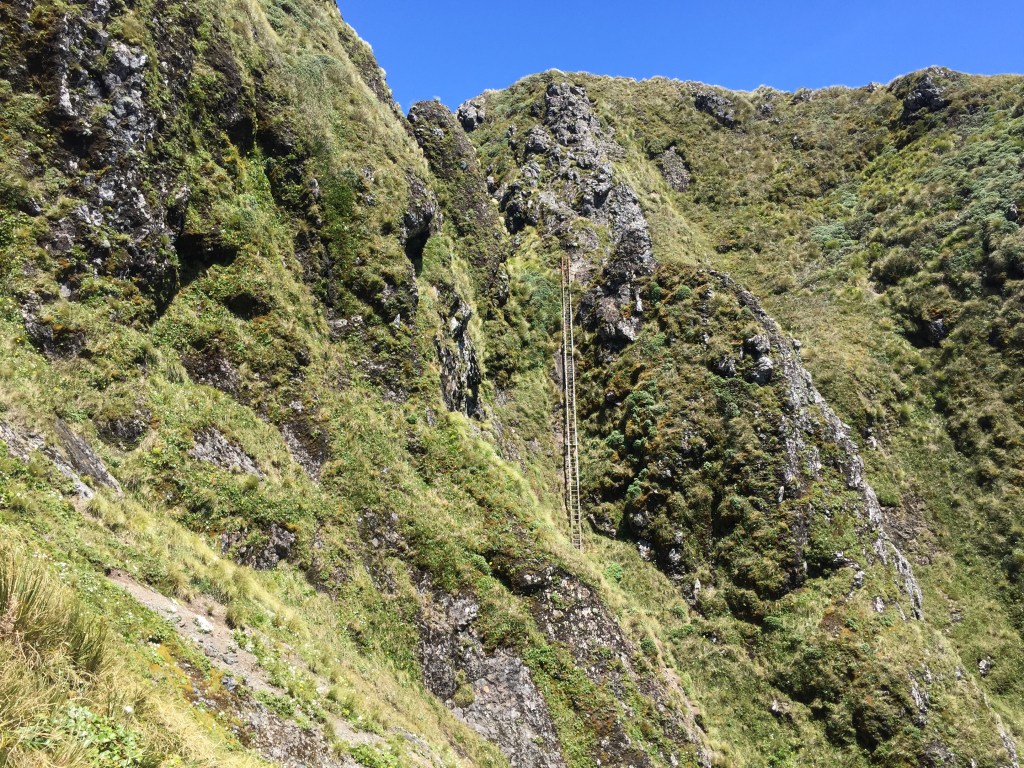
Finally I was on the last, tough, narrow ascent to Maungahuka. Over its right shoulder, those sheer and storied Tararua Peaks. Just looking at their near vertical sides made my heart hammer faster than it already was. I realised I’d have to reconsider my hope of getting out to Ōtaki Gorge Road by that evening. There’d be no hurrying over these puppies:
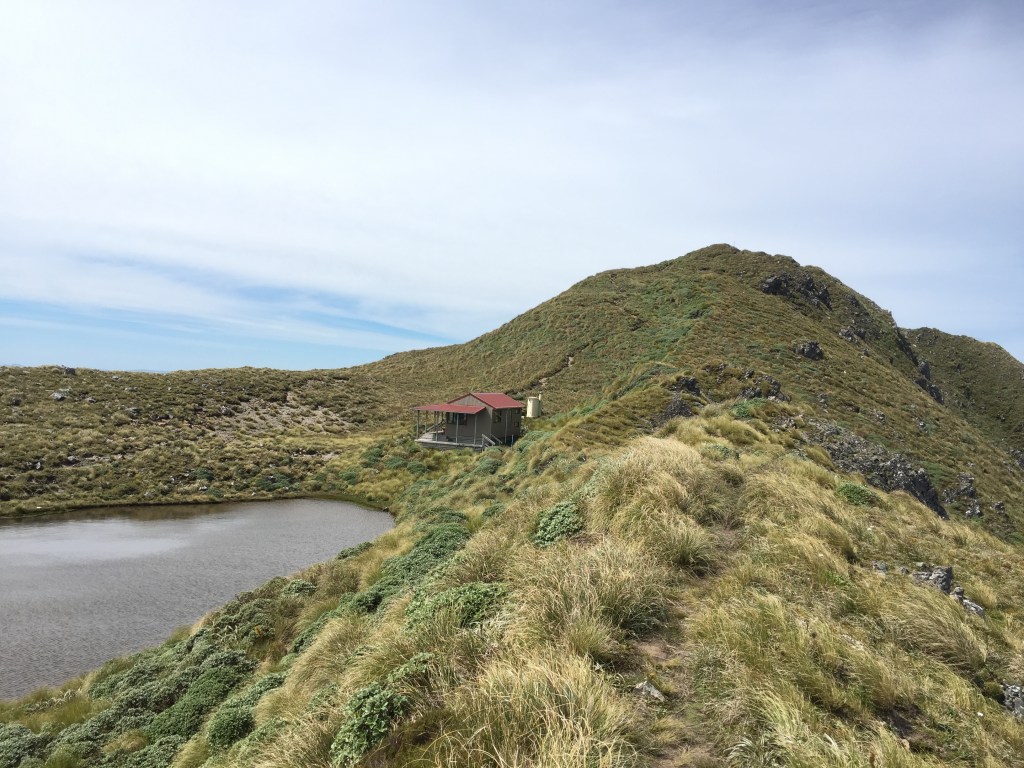
Finally, Maungahuka Hut came into view. It’s one of the most picturesque hut sites I’ve visited:
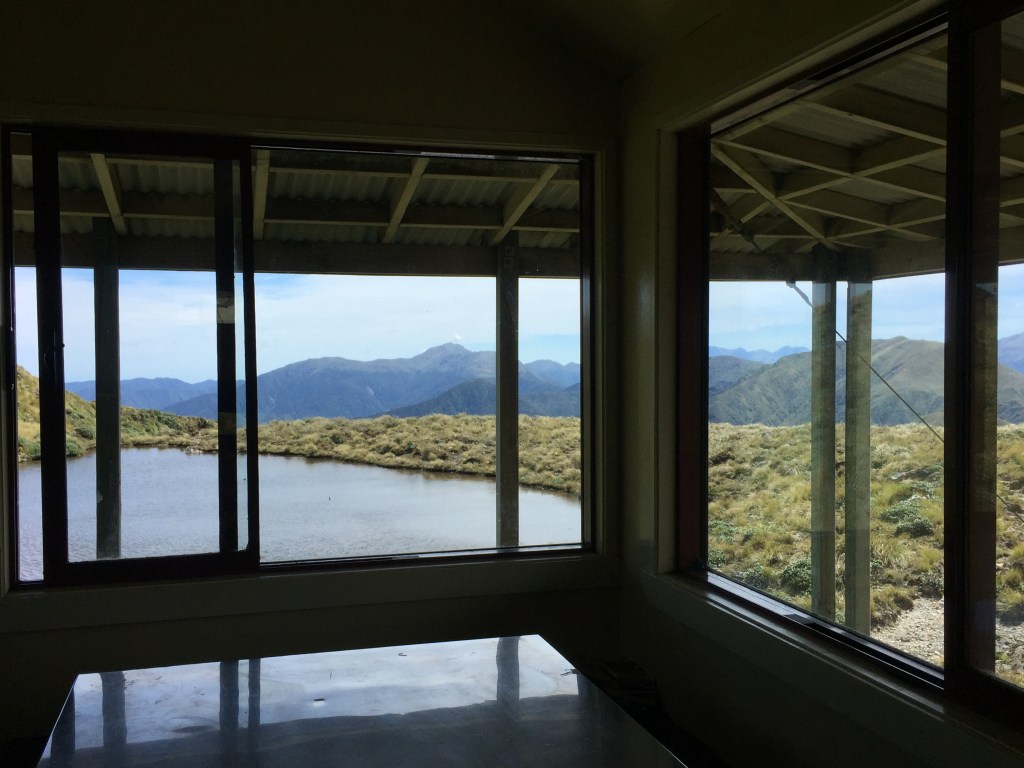
Maungahuka comes from maunga, meaning mountain, and huka meaning snow, and this whole range is often blanketed in white through the middle part of the year (and beyond). Today though it was sunlight falling hard and heavy, and it was a relief to skirt the tarn and enter the hut’s cool shadow. Even there, the view and setting were among the best you’ll see:
I filled up with water, food and coffee and tried to compose myself. The Tararua Peaks were just ahead, and I had just realised I was unusually nervous. I could feel my pulse beating faster than it should when you’re at rest, sipping coffee before a majestic, silent, sun-soaked panorama. I reflected on why. Sure, the near-vertical rock columns are famous for being a bit scary: they used to be only passable by those with high levels of daring and mountaineering skills, as well as ropes. Then the Forest Service put in a chain ladder, later upgraded by DOC to the current heavy-duty, 70-rung, seismic-tested steel ladder bolted to rock. But it’s still much respected as a particularly hairy little section. Which, normally, would have exhilarated rather than bothered me. So what was different?
Something I haven’t mentioned until now is that at that point, my partner and I were expecting our first child. Since then my son has been born, and he’s an utter delight. But at that moment, I was suddenly conscious of what it would be like for him to lose his dad before even drawing breath. It put risk-taking and danger into an entirely new light.
There was nothing for it though, except to calm down, put one foot after the other, and make my way carefully toward my future son. Step by step, through the narrow little notch between Tunui (1325m) and it’s slightly smaller partner, Tuiti.
First though there was a last look back at the rugged, lofty lane I’d been following those last few days. That’s Simpson in the foreground, then Aokaparangi, then Kahiwiroa, then Crawford poking up near the centre, and Pukematawai on the horizon.
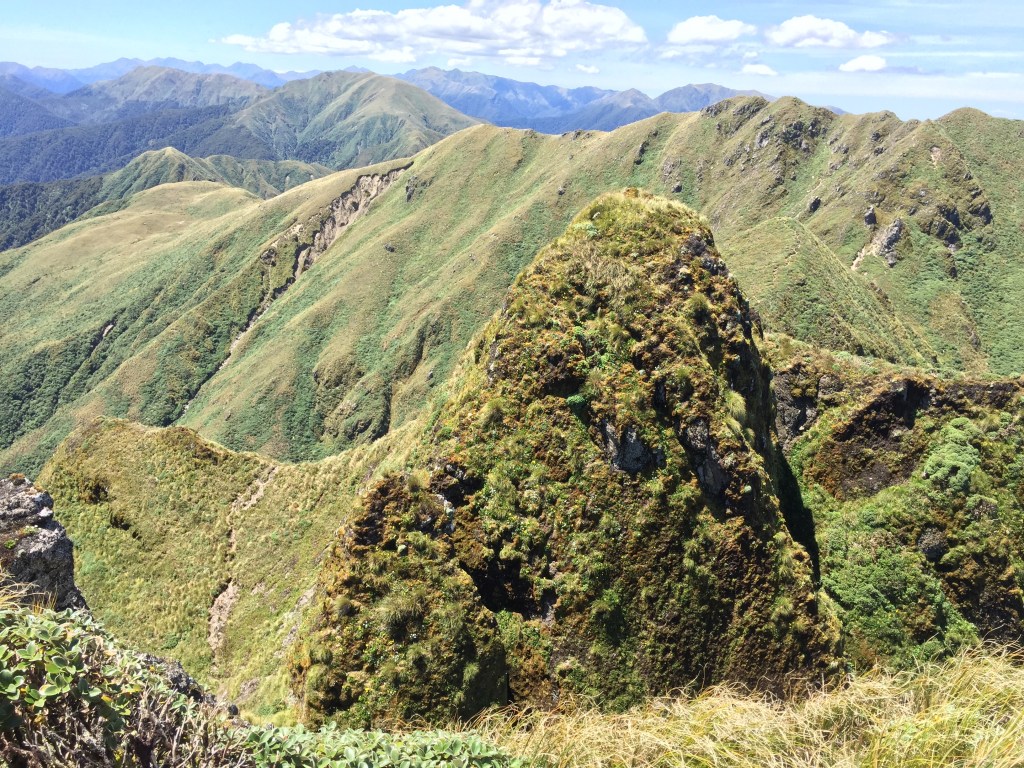
Here’s my first close-up view of Tunui:
Already the footing was getting a little precarious as the spine of the land narrowed. It’s not only the difficult terrain that gives this place an aura. To the iwi of the area, this is a crux of many ancestral stories and territories. Te Ara notes, for example, the Ngāti Toa people named this whole range Te Tuarātapu-o-Te Rangihaeata (the sacred back of Te Rangihaeata, a Ngāti Toa leader) to seal a peace deal between Ngāti Toa and neighbouring Ngāti Kahungunu. Here, at this knotty, rocky junction, it felt as if I was right between those gigantic shoulder blades.
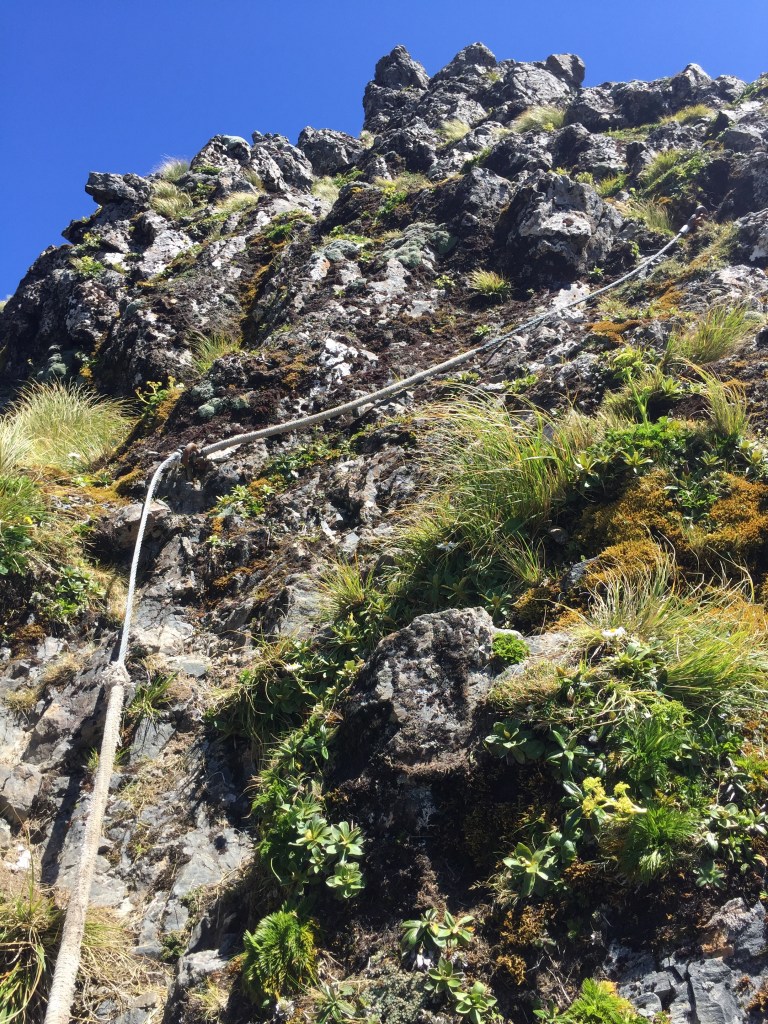
The going here is tough, and you have to reflect minutely and humbly on the land as you traverse it, often on all fours – every foot-fall or knee-press counts, every hand hold.
Close to the steepest part, chains are bolted into the rock. They were mostly unnecessary for me that day (except for psychological comfort), but in ice, snow, rain and fog they would be a godsend.
Finally it came into view, the fabled ladder.
I used to live in Wairarapa and from certain points there you can see these distinctive twin peaks jutting up, like remote rock chimneys. I’d been watching them for years. Reading and hearing about their history, about others’ adventures on them. Now I was sidling right up to them.
At the ladder’s foot I laid down my pack to have a breather. It was a moment to savour.
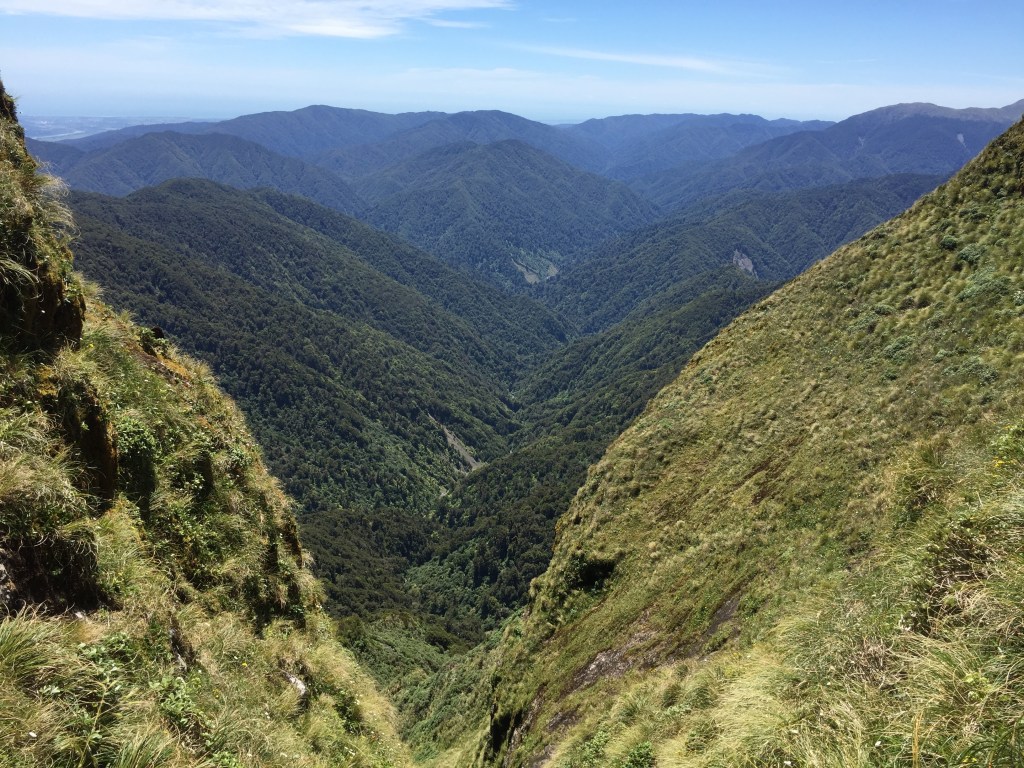
At the top of the ladder, framed by the two outcrops I stood between, the views were a marvel. I was in the heart of the Tararua Range, just as about as far from a road-end as you can get in this park. The bush far below was silent, serene. The tussock rippled, languid, lapped by the breeze.
It wasn’t over, though. More scrambling and dangling and scrabbling lay in wait.
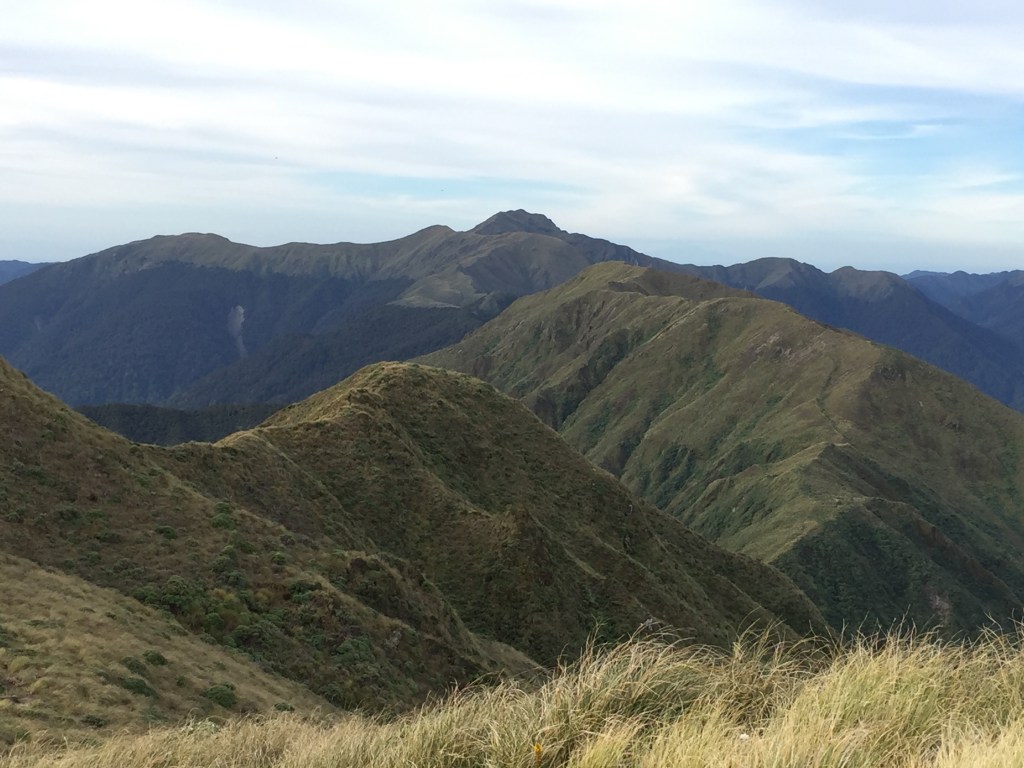
The next pic shows, from the top of Tuiti, the route ahead. That moment, again, when you crest a hill and a new swathe of tramping unfurls before you. The peak in the foreground is McIntosh (1286m). On the horizon, two peaks of the famous Southern Crossing, from west to east, Ōtaki to Upper Hutt: Bridge Peak (1421m) and Mt Hector (1529m). The destination I needed to reach by nightfall, Kime Hut, was between those two peaks. Till then, I’d have no opportunity to get more water and no respite from hard, undulating tramping, mostly upward. It seemed very far away.
Looking in the other direction, Tunui in the foreground, and the way I’d come spreading out behind.
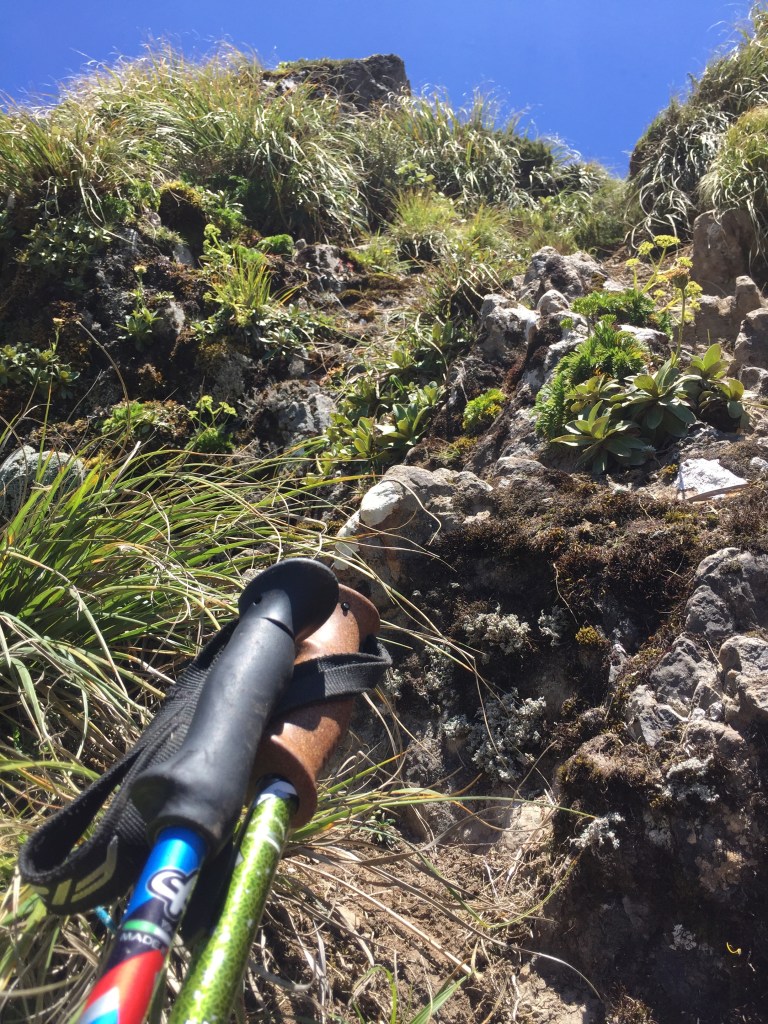
In huge landscapes like this it’s easy to overlook the tinier delights:
You can’t look at them too closely though, because you have to keep your eye on the often-dicey footing:
Somewhere up around the top of McIntosh I was really struggling. My feet were in a bad way, blistered, swollen and sore. It’s a given when you haven’t done a lot of training, and then head out into the back country and walk all day for nearly five days straight. Sooner or later your feet will say: we need a day off.
But that wasn’t an option so I just had to nurse those battered little hobbit hooves along. That meant stopping every hour or so, shedding boots and socks, attending to blisters and crushed toes, and putting my feet up on my pack for fifteen minutes. It made for a long, hot afternoon, especially as there are no trees on the high tops, and therefore no shade. It was midsummer, roasting hot, and I was sunburned, dehydrated and running out of water. But there’d be no more till I got to Kime, still a good four km and 300m climb away.
At one point I curled up under a gnarled and woody shrub, blasted bone-white and low to the ground by the prevailing northerly, nearly bare of leaves. It was the only meagre shade I could find. Despite the pressure to keep going before the light faded, I couldn’t keep from snoozing a little.
Finally, the sun began to fall, the sizzle to go out of the air and the shadows to lengthen. A deceptively tough scramble got me up and over McIntosh and then Yeates (1205m). Then I was looking back toward the twin peaks, and beyond them Maungahuka and Aokaparangi:
With much swearing, sweat and foot-soreness I continued then over Vosseler (1108m) and Boyd-Wilson Knob (1138m). To give myself some attacking energy I began personifying the last one as a kind of mean, posh bully: “that Boyd-Wilson knob”. Finally I was on the last, long, tough ascent, up a steep spur onto the east-west range that forms the T-junction terminus of the main range. Here’s the view back the way I’d come from that point, from near Bridge Peak. You can see lights coming on down on the Wairarapa plain:
Then it was a slog in the gathering gloom over Hut Mound (1440m) to Kime Hut. On the way, the lights of Wellington winked around the harbour in the distance:
After what seemed an unfeasibly long time I was stumbling wearily onto Kime’s ample verandah and slipping into the shadowy interior. On several bunks were the still forms of other trampers, already asleep. I got carefully into my sleeping bag in the dark, every fibre aching. I munched biltong, sculled water and sipped whiskey. It had been a mammoth day but I’d made it.
Day 99: Kime Hut to Ōtaki Gorge carpark, about 12 km
In the morning I had a good and much-needed sleep in, ear plugs and eye-mask keeping me drowsing through the other trampers’ morning clatter. When I finally got up I felt like I’d been hit by a truck. I’d reached my physical limit, the most hard tramping I can really do at this stage of my life without a day off: five days’ hard, continuous walking. I really needed a break but there was no way – I had to get back to Wellington for work. Slowly I put myself back together, breakfasted and set off. Below is the view looking back at Kime Hut, out toward Hutt Valley and the Remutaka Range. Looks like I was too tired to focus properly:
To the north, Mt Ruapehu trailed a plume of cloud, beyond Bridge Peak and the Oriwa Ridge:
From Dennan (1214m) the ground dropped away like a rough staircase down toward Field Hut. In the distance, the Ōtaki River ran down to the Tasman Sea:
The next pic is looking back up toward Dennan, from around Table Top (1047m). It looks benign in this kind of weather, but if you’re heading the opposite way to what I was, i.e. up onto the exposed tops, this is a possible point of no return. More than one tramper has decided to push on from here despite a bad forecast, and never made it home. The Southern Crossing is notorious for offering few escape routes when the weather turns savage, which it can do in a blink. Table Top is a good place to take stock.
For me though, it was down into the cool relief of the bushline. It was the first time I’d been under a canopy for days.
Around the point I heard a hectic crashing near the track which made me stop, heart pounding. But only for a moment – in Aotearoa that sort of sound can only be something much more keen to get away from you than harm you, like deer, pigs or stock.
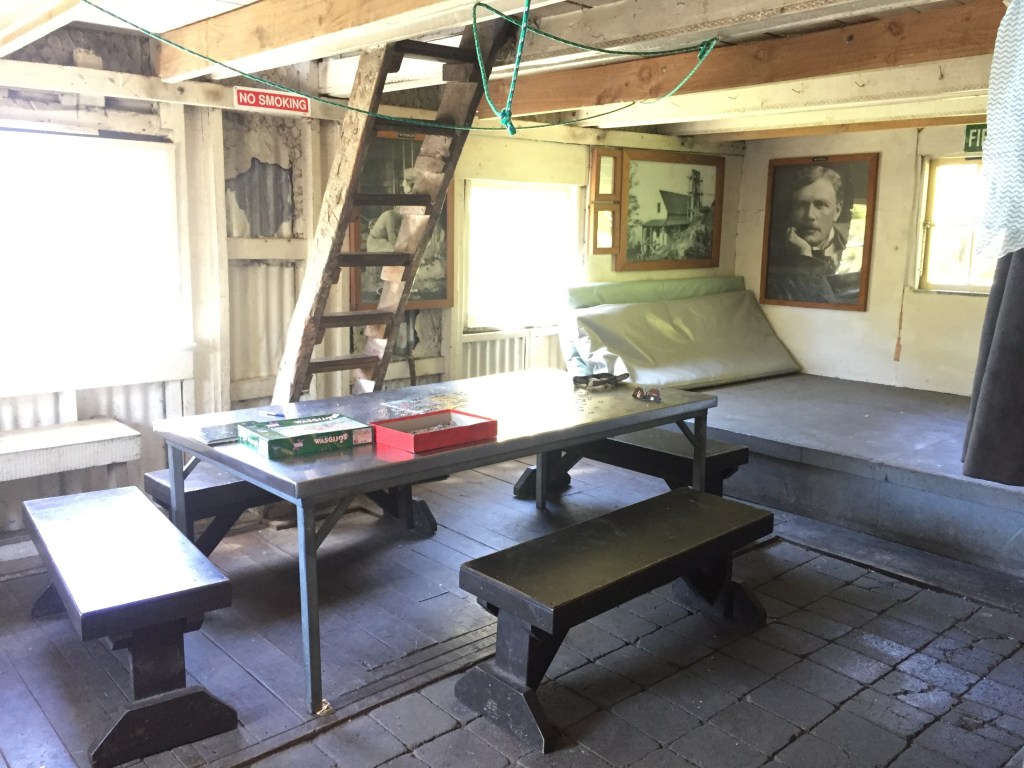
I pushed on and soon reached the quirky, old-school charms of Field Hut.
It’s a comfy, historic hut full of character, and at only a few hours from the road-end, an easy overnight destination. Someone had left a partly complete jiogsaw puzzle on the table.
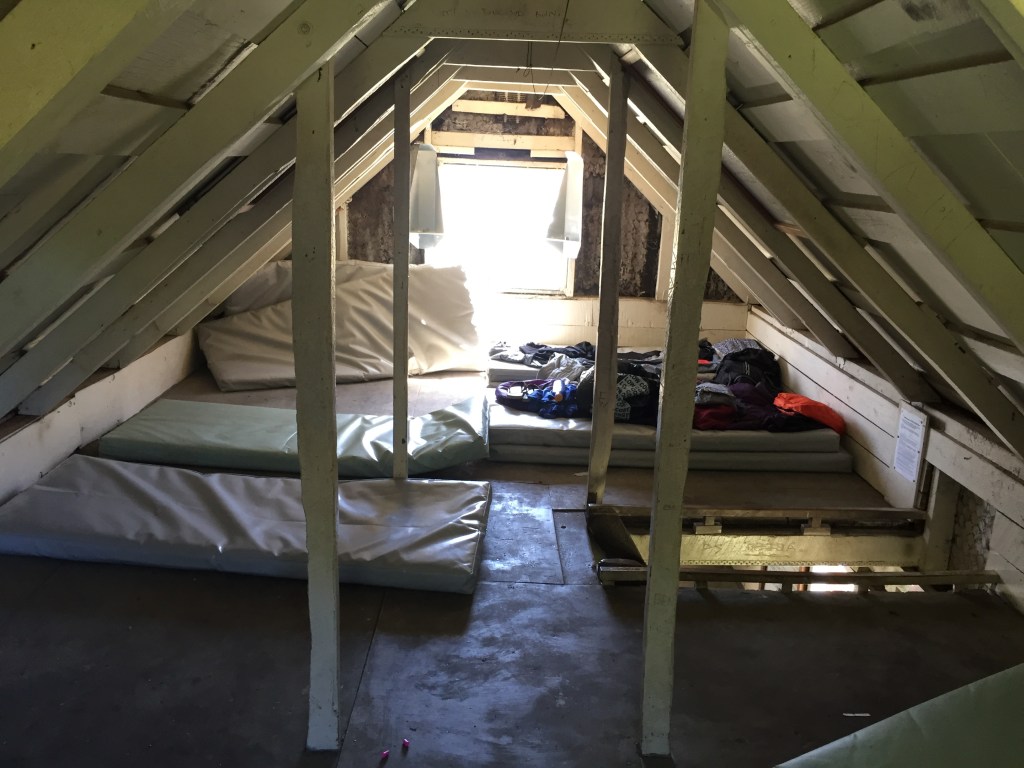
There’s a sleeping platform downstairs, near the log burner, and upstairs there’s a neat loft with plenty more room:
Historic photos show the hard work needed to build and maintain this old beauty:
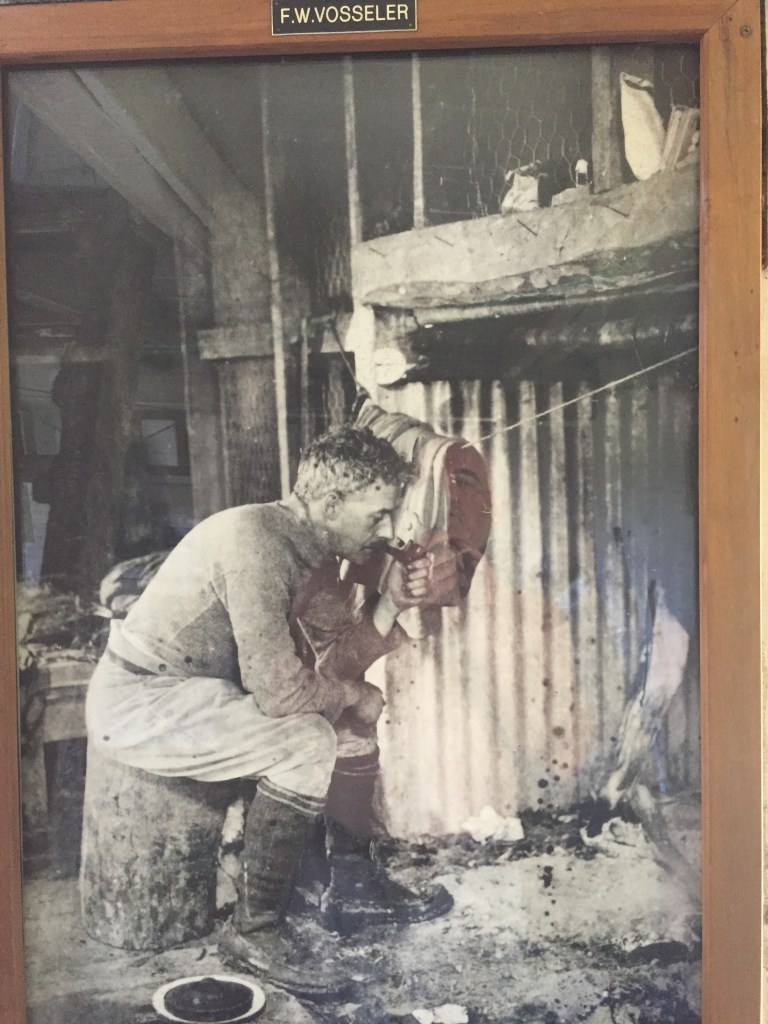
It’s a special place: one of the first purpose-built tramping huts in Aotearoa, and the oldest surviving recreational hut in the Tararua Ranges. The foundations and framing were built with pit-sawn timber from trees felled nearby, and the rest of the materials were hauled in by packhorse. It was built in 1924 by members of the country’s first tramping club, and arguably the people who invented the term tramping: the Tararaua Tramping Club. Here’s one of its founders, Fred Vosseler, in the hut named after his friend and co-founder, Willie Fields:
Someone’s note in the hut book confirmed what I’d thought about the heavy crashing through the scrub up near the bushline: wild goats are known to roam there.
Then it was on and down the long and snaking path, with the obligatory hourly stops to let the tears drain out of my crying feet:
Finally the tranquil river flats at Ōtaki Forks opened up through the thinning bush.
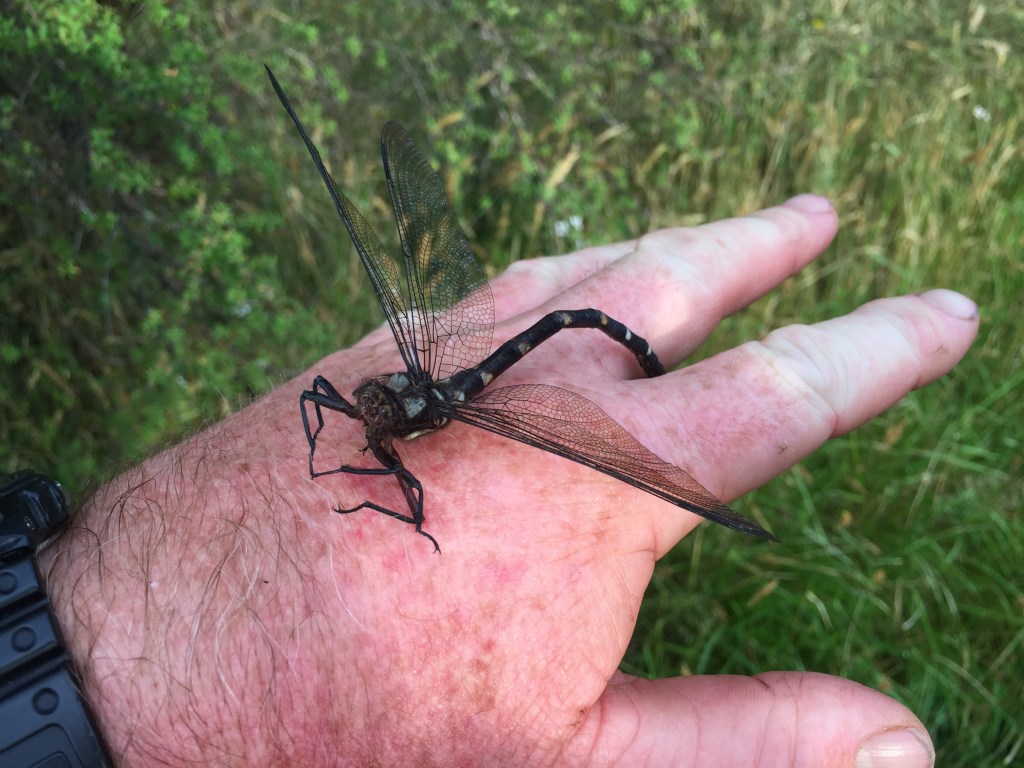
The path wends down through abandoned paddocks of long grass. In one, under a canopy of mānuka, I found this amazingly filigreed creature:
It was dead, the enormous frame a near weightless husk. Wikipedia tells me it was probably Uropetala carovei (New Zealand bush giant dragonfly). Their Māori name, kapokapowai, means “water snatcher”, for the extendable jaw that shoots out to snatch prey.
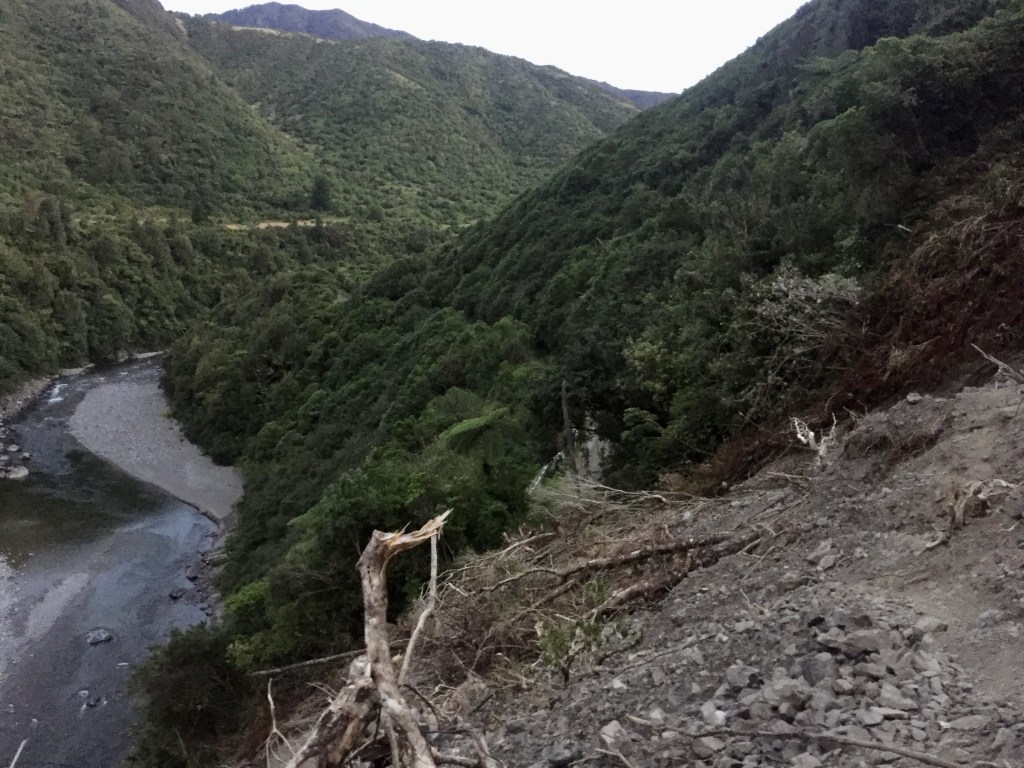
I pushed on, past the turnoff to Pārāwai Lodge (where I’d spent a night on an earlier Te Araroa expedition) and across the swing bridge to the gravelled Ōtaki Gorge Road. There’s a turn-off a few kms along it to a lengthy bypass around a big slip. Several locals and other trampers had told me the slip is safe to cross on foot, if you’re careful. I was pressed for time and didn’t fancy a two- or three-hour, steep and slippery bypass, so I nipped across. It’s an impressive slump of mountainside, and you are perched at times a little precariously above the river. But there’s a well-trodden path across, someone’s rigged up a helpful hand-line, and it was much quicker and easier than going around.
Note: The Te Araroa website’s “trail status” page is currently showing that a safe path across the slip has has constructed. I’d recommend taking it, in preference to the steep, much longer by-pass, which is still in place.
Finally I was at the Shields Flat Carpark, where I’d left my wheels. This is looking back at the gate I’d just scrambled over, as the long summer dusk closed in.
That was it – I’d done it. The whole North Island between Waikato and Wellington, all-but complete. (I’d completed Ōtaki Forks to Wellington earlier, when bad weather forced me to skip ahead, against my normal policy of completing each section consecutively. My account of that section follows this). Most of Auckland and all of Northland are done, too.
Still to walk: A three-day section of the Hunua Range, south of Auckland (closed due to kauri dieback – if they don’t reopen it by the time I’m ready to tick it off, I’ll walk the road by-pass); one kilometre of Te Kūiti main street (skipped because the person I was staying with insisted on dropping me off further down the road than I wanted); and the last day of the North Island, between the Wellington suburbs of Ngaio and Island Bay. Which I’m saving up for when everything else is done, so that when I walk down and touch the water of Island Bay, I’ll know that I’ve walked every last bit of land between it and Cape Rēinga.
But apart from that, I’ve walked every metre. It’s a very good feeling.
Now that my son Maian has arrived, those final North Island Te Araroa tramps – and the whole of Te Waipounamu/ the South Island – will have to wait. Possibly until he’s old enough to join me.
On that note, here’s a picture painted to welcome Maian into the world, by my friend Chris Murray’s daughter Olivia:
By Olivia Murray
When that time comes, I’ll put an account of it on here.
Thanks for reading my Te Araroa journey so far. Previous legs of it are posted above this one, and as mentioned another few posts follow, covering the path to Wellington.
I’ll conclude this long chapter of tramping and blogging with a whakataukī (Māori proverb) that’s stood me in good stead these 99 days (spread over five years between January 2017 and January 2022) and 1500-odd kilometres, from Cape Rēinga to Pōneke:
Whāia te iti kahurangi, ki te tuohu koe, me he maunga teitei.
Seek the treasure that you value most dearly, and if you bow your head, let it be to a lofty mountain.






































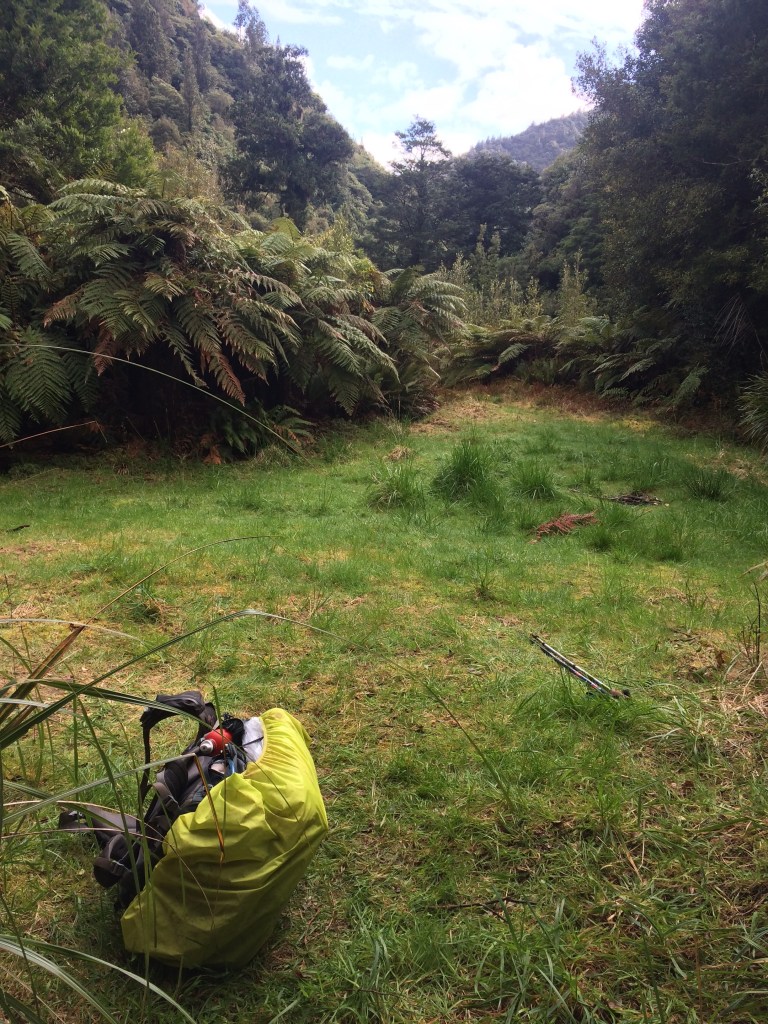

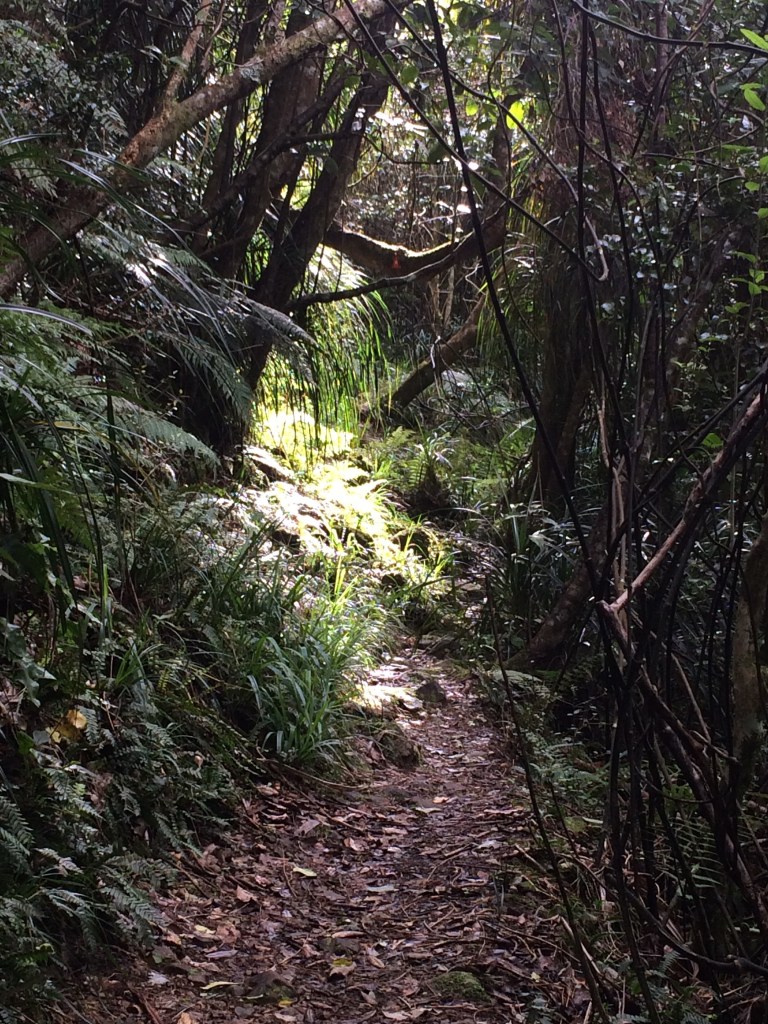


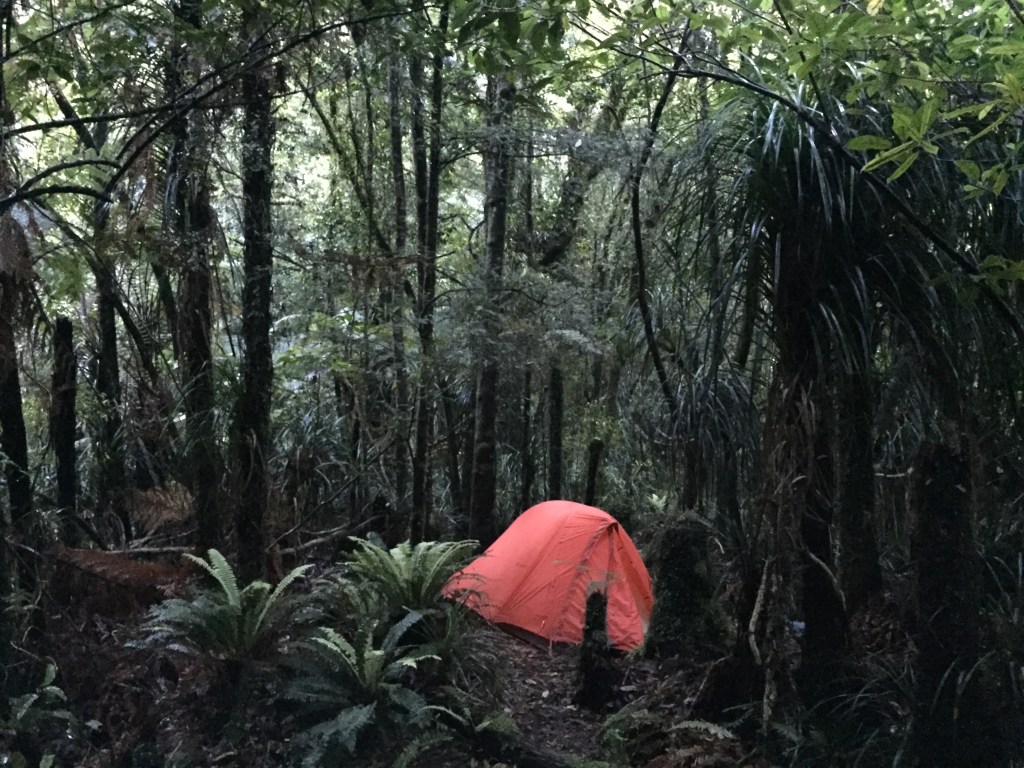


































 A Moonlit Tramp